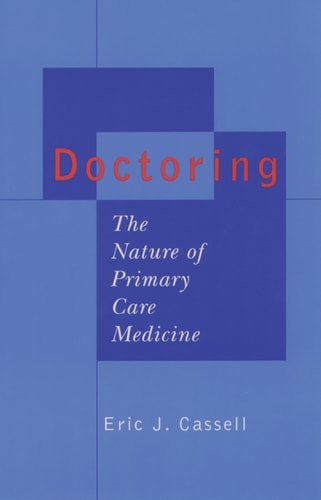
Doctoring: The Nature of Primary Care Medicine
0
0
As an Amazon Associate and affiliate partner, Menrva Books earns from qualifying purchases. Learn more
Author Description
American medicine attracts some of the brightest and most motivated people the country has to offer, and it boasts the most advanced medical technology in the world, a wondrous parade of machines and techniques such as PET scans, MRI, angioplasty, endoscopy, bypasses, organ transplants, and much more besides. And yet, writes Dr. Eric Cassell, what started out early in the century as the exciting conquest of disease, has evolved into an overly expensive, over technologized, uncaring medicine, poorly suited to the health care needs of a society marked by an aging population and a predominance of chronic diseases. In Doctoring: The Nature of Primary Care Medicine, Dr. Cassell shows convincingly how much better fitted advanced concepts of primary care medicine are to America's health care needs. He offers valuable insights into how primary care physicians can be better trained to meet the needs of their patients, both well and sick, and to keep these patients as the focus of their practice. Modern medical training arose at a time when medical science was in ascendancy, Cassell notes. Thus the ideals of science--objectivity, rationality--became the ideals of medicine, and disease--the target of most medical research--became the logical focus of medical practice. When clinicians treat a patient with pneumonia, they are apt to be thinking about pneumonia in general--which is how they learn about the disease--rather than this person's pneumonia. This objective, rational approach has its value, but when it dominates a physician's approach to medicine, it can create problems. For instance, treating chronic disease--such as rheumatoid arthritis, diabetes, stroke, emphysema, and congestive heart failure--is not simply a matter of medical knowledge, for it demands a great deal of effort by the patients themselves: they have to keep their doctor appointments, take their medication, do their exercises, stop smoking. The patient thus has a profound effect on the course of the disea
Menrva's Summary
THE THESIS
This book investigates the fundamental disconnect between modern, technology-driven medical practice and the actual health care needs of a society increasingly burdened by chronic illness. Dr. Eric Cassell, a physician and medical educator, argues that the historical shift toward scientific objectivity has prioritized the treatment of disease over the care of the individual patient. He proposes a shift in medical training and practice that centers on the primary care relationship to better manage long-term health outcomes.
THE SCOPE MAP
What You Will Find
- Analysis of the evolution of medical training from the early 20th century to the present.
- A critique of the over-reliance on high-technology diagnostics and interventions.
- Frameworks for integrating patient-centered communication into clinical practice.
- Examination of the specific challenges posed by chronic conditions like diabetes and heart failure.
Scope Limits
- The text does not provide a comprehensive policy guide for health insurance reform.
- It does not focus on surgical or acute care specialties except as a contrast to primary care.
THE AUTHORITY PERSPECTIVE
Experts and practitioners frequently cite this work as a foundational text for understanding the philosophy of primary care. Readers often note that the prose is accessible yet intellectually rigorous, making it a standard reference for those interested in the humanistic side of medical practice.
Page Count:
220
Publication Date:
2002-01-01
Publisher:
Oxford University Press
ISBN-10:
0190289236
ISBN-13:
9780190289232
Medical
Medical care
Physician & Patient
Health Policy
Patient Care
Medicine
Allied Health
Medical Ethics
Family Practice
Primary Care
Community Tags
Similar Books