Kurt Wanski (1922-2012)
0
0
As an Amazon Associate and affiliate partner, Menrva Books earns from qualifying purchases. Learn more
Author Description
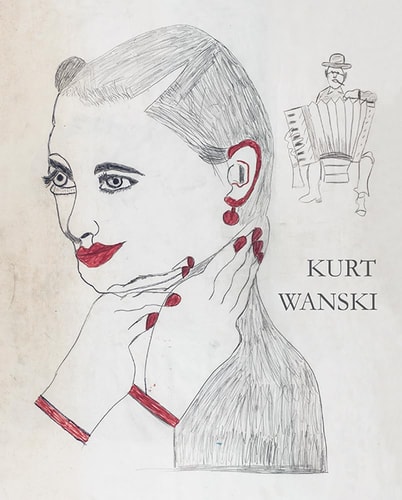
In the early 20th century, the canon of works consecrated by the history of art was increasingly challenged by critics such as Hans Prinzhorn and artists such as Jean Dubuffet, who focused on the works of so-called dilettantes, self-taught artists, and lunatics as primordial artistic expressions seemingly related to the art of primitive tribes and children. The art of these 'outsiders,' for which Dubuffet coined the term 'Art Brut', was special in its instinctive directness. It is free from academic influences, resulting instead from a kind of maniac production without any model or strategy. Today, Kurt Wanski (1922-2012) remains one of the least known major exponents of Art Brut, despite having been a renowned and respected figure in East Berlin's art scene. From the outset, Wanski spent his life in asylums and hospitals before finally moving to the safe haven of a Catholic mental health institution. He always remained independent as an artist. A captive of his own world, Wanski primarily used magazines and journals as models for his drawings. Although he redrew the motifs in a rather clumsy way, his works are more magical than the original designs. For Wanski, who never left Berlin during his lifetime, printed pictures were an unlimited source of inspiration linking the real world with his imagination. Text in English and German.
Menrva's Summary
THE THESIS
This book explores the life and work of Kurt Wanski, a significant but lesser-known figure in the Art Brut movement. The text examines Wanski's artistic development within the context of early 20th-century art criticism, which began to challenge traditional canons by focusing on 'outsider' art. It details his life, largely spent in asylums and hospitals, and his independent artistic practice, which drew inspiration from magazines and journals to bridge his internal world with external reality.
THE SCOPE MAP
- Biographical details of Kurt Wanski (1922-2012), an exponent of Art Brut.
- Analysis of Wanski's artistic context, including critics like Hans Prinzhorn and artists like Jean Dubuffet.
- Discussion of 'Art Brut' as a concept, characterized by instinctive directness and freedom from academic influence.
- Examination of Wanski's primary artistic medium: drawings based on magazine and journal imagery.
- Exploration of Wanski's unique approach to reinterpreting existing images, imbuing them with a magical quality.
- Contextualization of Wanski's work within the East Berlin art scene.
- Bilingual text: English and German.
THE AUTHORITY PERSPECTIVE
This biography and art historical study positions Kurt Wanski as a key, yet under-recognized, figure within the Art Brut movement. The book's focus on his life within institutions and his unique artistic process, which transformed popular imagery into something more magical, highlights his distinct contribution. It serves as an important document for understanding the broader discourse around outsider art in the early 20th century.
Page Count:
207
Publication Date:
2019-01-01
Publisher:
Verlag Kettler
ISBN-10:
3862067416
ISBN-13:
9783862067411
Biography
Non-Fiction
Art
Outsider Art
Art History
Community Tags
Similar Books