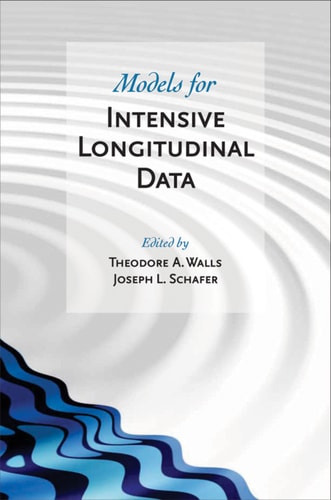
Models for Intensive Longitudinal Data
0
0
As an Amazon Associate and affiliate partner, Menrva Books earns from qualifying purchases. Learn more
Author Description
Rapid technological advances in devices used for data collection have led to the emergence of a new class of longitudinal data: intensive longitudinal data (ILD). Behavioral scientific studies now frequently utilize handheld computers, beepers, web interfaces, and other technological tools for collecting many more data points over time than previously possible. Other protocols, such as those used in fMRI and monitoring of public safety, also produce ILD, hence the statistical models in this volume are applicable to a range of data. The volume features state-of-the-art statistical modeling strategies developed by leading statisticians and methodologists working on ILD in conjunction with behavioral scientists. Chapters present applications from across the behavioral and health sciences, including coverage of substantive topics such as stress, smoking cessation, alcohol use, traffic patterns, educational performance and intimacy.Models for Intensive Longitudinal Data (MILD) is designed for those who want to learn about advanced statistical models for intensive longitudinal data and for those with an interest in selecting and applying a given model. The chapters highlight issues of general concern in modeling these kinds of data, such as a focus on regulatory systems, issues of curve registration, variable frequency and spacing of measurements, complex multivariate patterns of change, and multiple independent series. The extraordinary breadth of coverage makes this an indispensable reference for principal investigators designing new studies that will introduce ILD, applied statisticians working on related models, and methodologists, graduate students, and applied analysts working in a range of fields. A companion Web site at www.oup.com/us/MILD contains program examples and documentation.
Menrva's Summary
THE THESIS
How can researchers effectively model and analyze intensive longitudinal data (ILD) generated by modern high-frequency collection technologies? Editors Joseph L. Schafer and Theodore A. Walls compile contributions from leading statisticians and methodologists to address the unique challenges posed by data sets with high temporal density. The volume integrates theoretical statistical frameworks with practical applications across behavioral and health sciences, providing a comprehensive guide for managing complex multivariate patterns of change and irregular measurement intervals.
THE SCOPE MAP
What You Will Find
- Statistical strategies for modeling regulatory systems and curve registration
- Methodologies for handling variable frequency and spacing of measurements
- Applications in stress, smoking cessation, alcohol use, and educational performance
- Documentation and program examples for implementation
Scope Limits
- Does not cover basic introductory statistics for those without a foundational understanding of longitudinal analysis
- Does not provide exhaustive coverage of every possible software package beyond the examples provided
THE AUTHORITY PERSPECTIVE
Experts identify this volume as a primary reference for researchers and methodologists navigating the complexities of high-frequency data collection. Readers frequently note the technical density of the prose, which is tailored specifically for advanced practitioners and graduate-level students in the behavioral sciences.
Page Count:
309
Publication Date:
2006-01-01
Publisher:
Oxford University Press
ISBN-10:
019029163X
ISBN-13:
9780190291631
Social Science
Data Science
Social Research
Probability
Mathematics
Statistics
Behavioral Science
Medical
Epidemiology
Mathematics Statistics
Statistical methods
Research Methods
Allied Health
Community Tags
Similar Books