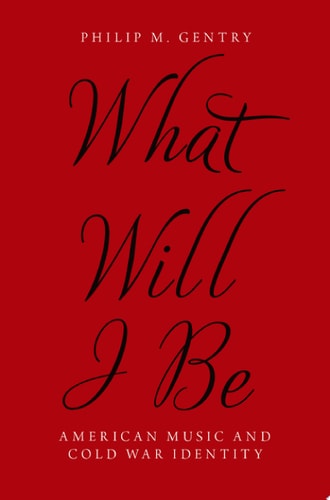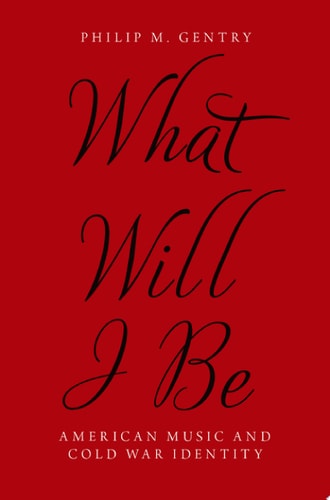
What Will I Be: American Music and Cold War Identity
0
0
As an Amazon Associate and affiliate partner, Menrva Books earns from qualifying purchases. Learn more
Author Description
In the wake of World War II, the cultural life of the United States underwent a massive transformation. At the heart of these changes during the early Cold War were the rise of the concept of identity and a reformulation of the country's political life. A revolution in music was taking place at the same time-a tumult of new musical styles and institutions that would lead to everything from the birth of rock 'n' roll to the new downtown experimental music scene. Together, these new cultural and musical trends came to define the era. In the search for new social affinities and modes of self-fashioning, music provided just the right tool. What Shall I Be follows the concept of identity as it developed alongside new post-war music making. Author Philip M. Gentry travels through four very different musical scenes: the R&B world of doo-wop pioneers the Orioles, the early film musicals of Doris Day, Asian American cabaret in San Francisco, and John Cage's infamous 4'33". The lives of musicians, composers, critics, and fans reveal how individuals negotiated the social changes sweeping the country in the initial days of the Cold War. As we are again swept up in a time of significant transformation, these early strategies help to inform the political and musical narratives of today.
Menrva's Summary
THE THESIS
This book investigates how the concept of identity was constructed and negotiated through the lens of American music during the early Cold War period. Philip M. Gentry, a scholar of music and cultural history, utilizes archival research and musicological analysis to argue that post-war musical shifts were not merely aesthetic, but were fundamental tools for individuals seeking to define their social and political roles in a rapidly changing nation. By examining specific musical scenes, the author demonstrates how the era's anxieties and aspirations were codified in sound and performance.
THE SCOPE MAP
What You Will Find
- Analysis of the R&B scene through the career of the doo-wop group The Orioles.
- Examination of early film musicals featuring Doris Day as a site of identity formation.
- Investigation into Asian American cabaret culture in San Francisco.
- Critical study of John Cage’s experimental composition 4'33".
Scope Limits
- The text does not provide a comprehensive history of all musical genres present in the United States during the 1950s.
- The analysis does not extend into the later developments of the 1960s counterculture movement.
THE AUTHORITY PERSPECTIVE
Scholars in the field of musicology and American studies recognize this work as a nuanced contribution to the understanding of mid-century cultural identity. Readers frequently note the academic density of the prose, which effectively bridges the gap between music theory and historical sociology.
Page Count:
197
Publication Date:
2017-01-01
Publisher:
Oxford University Press
ISBN-10:
0190299614
ISBN-13:
9780190299613
Music
Sociology of Music
Cold War
Humanities
American Studies
Music History
Community Tags
Similar Books