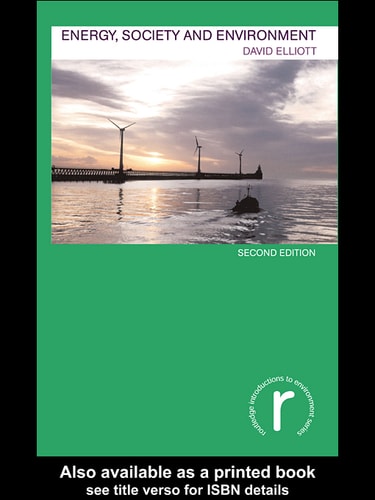
Energy, Society and Environment
0
0
As an Amazon Associate and affiliate partner, Menrva Books earns from qualifying purchases. Learn more
Author Description
Whilst energy use is fundamental to human existence, it is also at the heart of many environmental problems we face in the 21st century. Deteriorating air quality and the global warming phenomenon can all be attributed to our use of fossil fuels. The re-emergence of nuclear power as an alternative also prompts major concerns.Sustainable alternatives such as wind and hydroelectric power also face opposition.Energy, Society and Environment explores the ways in which energy interacts with society and the environment. The book is structured to provide: · An understanding of energy related environmental problems· An appreciation of the strengths and weaknesses of technological solutions· Knowledge of the social and institutional obstacles to implementing these solutions· An understanding of the strategic issues facing sustainable energy useThe revised edition reflects recent changes in the area. Chapters on nuclear and wind energy have been revised in response to recent debates. Coverage of fossil fuels has also been strengthened, whilst there is greater emphasis on environmental and energy policy in the context of the debate surrounding the Kyoto accord. Additional case-studies have been added which highlight alternative energy solutions.Energy, Society and Environment examines the potential and limits of technological solutions to energy related environmental problems and suggests that social, economic and political solutions may also be necessary to avoid serious environmental damage in the future. Global case studies are used throughout to ground the debates and illustrate the interaction between technological and social aspects.
Menrva's Summary
THE THESIS
This book investigates the complex interplay between global energy consumption, environmental degradation, and the socio-political frameworks required to implement sustainable alternatives. David W. Elliott, an expert in energy policy and technology, synthesizes technical data with social analysis to argue that technological innovation alone is insufficient to address the climate crisis. He posits that meaningful progress necessitates a comprehensive integration of economic, political, and institutional reform alongside the adoption of renewable energy sources.
THE SCOPE MAP
What You Will Find
- Analysis of the environmental impacts of fossil fuels, nuclear power, and renewable energy technologies.
- Examination of social and institutional barriers that impede the transition to sustainable energy systems.
- Global case studies illustrating the practical application and limitations of various energy policies.
- Discussion of international climate agreements, including the Kyoto accord, and their influence on energy strategy.
THE AUTHORITY PERSPECTIVE
Experts and academics frequently cite this text as a foundational resource for understanding the multi-dimensional nature of energy policy. Readers often note that the prose balances technical detail with accessible sociological analysis, making it a standard reference for students and professionals in environmental studies.
Page Count:
384
Publication Date:
2004-01-01
Publisher:
Taylor & Francis Group Plc
ISBN-10:
0203342453
ISBN-13:
9780203342459
Climate Change
Sociology
Nonfiction
Energy
Technology & Engineering
Social Aspects
Technologie
Power Resources
Technology
Aspect social
Energy policy
Sustainability
Community Tags
Similar Books