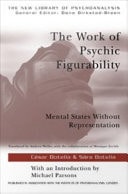
Work of Psychic Figurability: Mental States Without Representation
0
0
As an Amazon Associate and affiliate partner, Menrva Books earns from qualifying purchases. Learn more
Author Description
The Majority Of Psychoanalysts Today Agree That The Analytic Setting Faces Them Daily With Certain Aspects Of Their Work For Which The Answers Provided By An Analytic Theory Centred Exclusively On The Notion Of Representation Prove Insufficient. On The Basis Of Their Experience Of Analytic Practice And Illustrated By Fascinating Clinical Material, César And Sára Botella Set Out To Address What They Call The Work Of Figurability As A Way Of Outlining The Passage From The Unrepresentable To The Representational. They Develop A Conception Of Psychic Functioning, Which Is Essentially Grounded In The Inseparability Of The Negative, Trauma, And The Emergence Of Intelligibility, And Describe The Analyst's Work Of Figurability Arising From The Formal Regression Of His Thinking During The Session, Which Proves To Be The Best And Perhaps The Only Means Of Access To This State Beyond The Mnemic Trace Which Is Memory Without Recollection. The Work Of Psychic Figurability Argues That Taking This Work Into Consideration At The Heart Of The Theory Of Practice Is Indispensable. Without This, The Analytic Process Is Too Often In Danger Of Slipping Into Interminable Analyses, Into Negative Therapeutic Reactions, Or Indeed, Into Disappointing Successive Analyses.
Menrva's Summary
THE THESIS
This book investigates the limitations of traditional psychoanalytic theories centered on representation and proposes the concept of 'figurability' to address mental states that lack symbolic form. César and Sára Botella, drawing on their extensive clinical experience, argue that the analytic setting frequently encounters phenomena that cannot be captured by standard representational models. They present a framework that links the negative, trauma, and the emergence of intelligibility, suggesting that the analyst's formal regression is essential for accessing states beyond traditional memory.
THE SCOPE MAP
What You Will Find
- A theoretical framework for the 'work of figurability' in psychoanalytic practice.
- Clinical case studies illustrating the transition from unrepresentable states to representational thought.
- Analysis of the role of formal regression in the analyst's cognitive process during sessions.
- Exploration of the relationship between trauma, the negative, and the formation of psychic meaning.
THE AUTHORITY PERSPECTIVE
Experts in the field of psychoanalysis recognize this work as a significant contribution to the understanding of non-representational mental states. Readers frequently note the academic density of the prose, which is intended for practitioners and scholars familiar with advanced psychoanalytic theory.
Page Count:
240
Publication Date:
2004-01-01
Publisher:
Taylor & Francis Group
ISBN-10:
0203342208
ISBN-13:
9780203342206
Psychology
Psychoanalysis
Mental Health
Clinical Theory
Community Tags
Similar Books