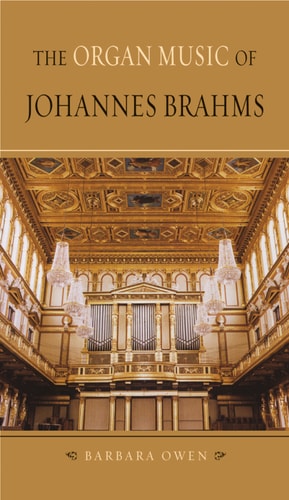
The Organ Music of Johannes Brahms
0
0
As an Amazon Associate and affiliate partner, Menrva Books earns from qualifying purchases. Learn more
Author Description
Influenced by Robert and Clara Schumann and Joseph Joachim, Johannes Brahms not only learned to play the organ at the beginning of his career, but also wrote significant compositions for the instrument as a result of his early counterpoint study. He composed for the organ only sporadically or as part of larger choral and instrumental works in his subsequent career. During the final year of his life, however, he returned to pure organ composition with a set of chorale preludes--though many of these are thought to have been revisions of earlier works. Today, the organ works of Johannes Brahms are recognized as beautifully-crafted compositions by church and concert organists across the world and have become a much-cherished component of the repertoire. Until now, however, most scholarly accounts of Brahms's life and work treat his works for the organ as a minor footnote in his development as a composer. Precisely because the collection of organ works is not extensive, the pieces--composed at different times during Brahms's lifetime--help to map his path as a composer, pinpointing various stages in his artistic development. In this volume, Barbara Owen offers the first in-depth study of this corpus, considering Brahms's organ works in relation to his background, methods, and overall artistic development, his contacts with organs and organists, the influence of his predecessors and contemporaries, and analyses of each specific work and its place in Brahms's career. Her expert history and analysis of Brahms's individual organ works and their interpretation also investigates contemporary practices relative to the performance of these pieces. The book's three valuable appendices present a guide to editions of Brahms's organ works, a discussion of the organ in Brahms's world that highlights some organs the composer would have heard, and a listing of the organ transcriptions of Brahms's work. Blending unique insights into composition and performance practice, this book will b
Menrva's Summary
THE THESIS
This volume investigates the significance of Johannes Brahms's organ compositions as a vital indicator of his artistic evolution rather than a minor footnote in his career. Barbara Owen, an expert in organ history, utilizes biographical data, historical context, and formal musical analysis to argue that these works provide a unique map of the composer's development. By examining his early counterpoint studies and his final return to the instrument, the author establishes a framework for understanding the technical and stylistic progression of Brahms's creative output.
THE SCOPE MAP
What You Will Find
- Detailed analysis of Brahms's complete organ corpus, including the late chorale preludes.
- Historical context regarding the organs and organists Brahms encountered during his lifetime.
- Appendices providing a guide to available editions, a survey of relevant historical organs, and a catalog of organ transcriptions.
Scope Limits
- The text focuses specifically on organ works and does not provide a comprehensive biography of the composer's entire life.
- It does not cover the broader orchestral or chamber music repertoire except where it intersects with organ composition.
THE AUTHORITY PERSPECTIVE
Scholars and musicians recognize this work as the primary academic resource for understanding the specific niche of Brahms's organ music. Readers frequently note the technical depth of the analysis, which serves as a foundational text for both performers and musicologists.
Page Count:
188
Publication Date:
2007-01-01
Publisher:
Oxford University Press
ISBN-10:
0190295104
ISBN-13:
9780190295103
Music
Biography
Humanities
Music theory
Organ
Music History
Community Tags
Other Editions(2)
Similar Books

Reader Comments
Share Your Thoughts
No comments yet. Be the first to share your thoughts!