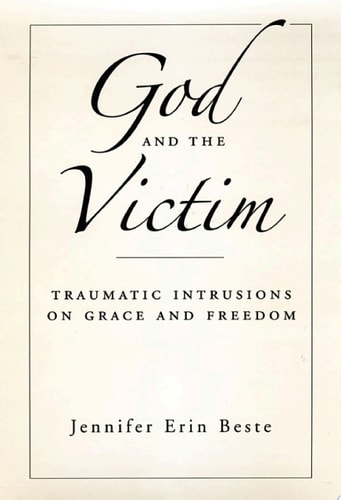
God and the Victim: Traumatic Intrusions on Grace and Freedom
0
0
As an Amazon Associate and affiliate partner, Menrva Books earns from qualifying purchases. Learn more
Author Description
Christian tradition holds that an individual's ability to respond to God's grace—to love both God and neighbor—is not wholly vulnerable to earthly contingencies, such as victimization. Today, however, trauma theory insists that situations of overwhelming violence can permanently damage a person's capacity for responsive agency. For Christians, this theory raises the very troubling possibility that humans can inflict ultimate harm on each other, such that some individuals' eternal destiny can be determined not by themselves but by those who do great harm. Jennifer Beste addresses the challenges that contemporary trauma theory and feminist theory pose to deeply-held theological convictions about human freedom and divine grace. Do our longstanding, widespread beliefs regarding one's access to God's grace remain credible in light of recent social scientific research on the effects of interpersonal injury? With an eye toward the concrete experiences of trauma survivors, Beste carefully considers the possibility that one can be victimized in such a way that his or her receptiveness to God's grace is severely diminished, or even destroyed. Drawing on insights present in feminist and trauma theory, Beste articulates a revised Rahnerian theology of freedom and grace responsive to trauma survivors in need of healing. Her thinking is characterized by two interconnected claims; that human freedom to respond to God's grace can in fact be destroyed by severe interpersonal harm, and that God's love can be mediated, at least in part, through loving interpersonal relations. Offering crucial insights that lead to a more adequate understanding of the relation between God's grace and human freedom, Beste's important theory reconfigures our visions of God and humanity and alters our perceptions of what it means to truly love one's neighbor.
Menrva's Summary
THE THESIS
This book investigates whether severe interpersonal trauma can permanently impair an individual's capacity to receive divine grace and exercise human freedom. Jennifer Erin Beste, a scholar in theology and ethics, evaluates the tension between traditional Christian doctrines of autonomous agency and contemporary trauma theory. By integrating social scientific research with a revised Rahnerian theological framework, she argues that extreme victimization can indeed diminish or destroy a person's receptiveness to grace, necessitating a re-evaluation of how divine love is mediated through human relationships.
THE SCOPE MAP
What You Will Find
- A critical analysis of Rahnerian theology regarding freedom and grace.
- Integration of feminist theory and trauma studies into theological discourse.
- A proposed model for understanding divine grace as mediated through interpersonal care.
Scope Limits
- The text does not provide a comprehensive clinical guide for trauma recovery.
- It does not attempt to resolve all metaphysical questions regarding eternal salvation.
THE AUTHORITY PERSPECTIVE
Scholars and theologians recognize this work as a significant contribution to the intersection of pastoral care and systematic theology. Readers frequently note the academic density of the prose, which is intended for those familiar with both theological discourse and trauma theory.
Page Count:
175
Publication Date:
2007-01-01
Publisher:
Oxford University Press
ISBN-10:
0190295112
ISBN-13:
9780190295110
Religion
Theology
Christian ethics
Philosophy of
Trauma Studies
Feminist Theology
Community Tags
Other Editions(2)
Similar Books

Reader Comments
Share Your Thoughts
No comments yet. Be the first to share your thoughts!