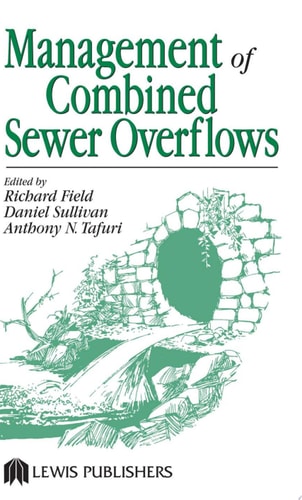
Management of Combined Sewer Overflows
0
0
As an Amazon Associate and affiliate partner, Menrva Books earns from qualifying purchases. Learn more
Author Description
There are approximately 10,000 combined sewer overflow (CSO) locations in the United States. During peak storm events they can release about 1.2 trillion gallons of waste and up to 95% of a municipality's raw sewage into surface waters. Although many cities have initiated programs, the CSO problem remains largely unsolved and continues to be a major area of responsibility for environmental professionals, engineers, and public works officials. Sponsored by the EPA, written by internationally recognized experts, and subjected to extensive peer review, Management of Combined Sewer Overflows provides the latest information on the subject from analysis of contaminants to long-term CSO control plans. Coverage includes:CSO analysis and characterization of contaminantsAnalysis and characterization of receiving-water impactsMethods of control such as storage, treatment, disinfection, and systems optimizationRegulations and complianceSystems retrofits and upgradesLong-term CSO control plansResearch and design needsAbatement or prevention of pollution stormwater runoff and CSOs is one of the most challenging areas in the environmental engineering field. The facts of life - from an engineering standpoint - are difficult to face in terms of design and cost. And operational problems can be just as foreboding. A reference for anyone combating urban wet-weather-induced water pollution, Management of Combined Sewer Overflows covers the gamut of engineering requirements, from pollution problem assessment and associated tools, to management and control planning and design.
Menrva's Summary
THE THESIS
This text addresses the critical engineering and regulatory challenges posed by combined sewer overflows (CSOs) in urban environments. Authored by experts associated with the EPA, the book synthesizes technical data and management strategies to assist environmental professionals in mitigating the discharge of raw sewage into surface waters. It provides a comprehensive framework for assessing contamination, designing control systems, and navigating compliance requirements.
THE SCOPE MAP
What You Will Find
- Technical analysis of CSO contaminants and their impact on receiving water bodies.
- Engineering methodologies for storage, treatment, disinfection, and system optimization.
- Regulatory compliance frameworks and strategies for long-term control planning.
- Practical guidance on system retrofits, upgrades, and research-based design needs.
THE AUTHORITY PERSPECTIVE
Experts recognize this work as a foundational reference for environmental engineers and public works officials tasked with managing wet-weather pollution. Readers frequently note the technical density of the prose, which serves as a rigorous guide for professionals navigating complex infrastructure design and cost constraints.
Page Count:
272
Publication Date:
2003-01-01
Publisher:
Taylor & Francis Group
ISBN-10:
0203502981
ISBN-13:
9780203502983
urban planning
Pollution Control
Public works
Civil Engineering
Sewage purification
Community Tags
Similar Books