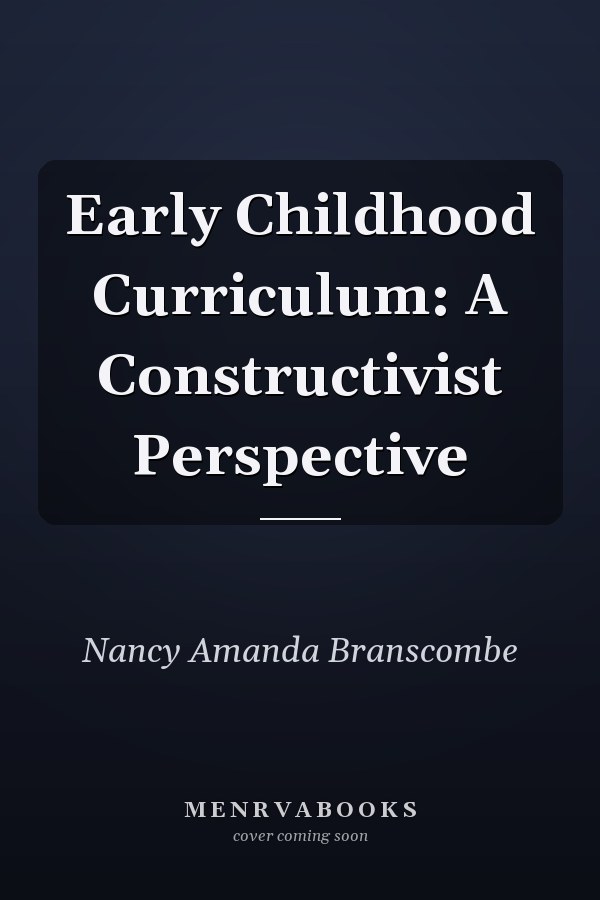
Early Childhood Curriculum: A Constructivist Perspective
0
0
As an Amazon Associate and affiliate partner, Menrva Books earns from qualifying purchases. Learn more
Author Description
Through Its Unique Integration Of Curriculum And Learning Principles, Early Childhood Curriculum: A Constructivist Perspective, 2nd Edition Fosters Authentic, Developmentally Appropriate Practice For Both Preschool And Early Elementary Classrooms. The Constructivist Format Of This Book Encourages Active Involvement On The Part Of Readers By Asking Them To Observe, Question, Reflect, Research, And Analyze, Thus Allowing Readers To Create Their Own Knowledge Through Their Responses And Actions. Early Childhood Curriculum Examines Curricular Goals Such As Autonomy, Development, And Problem Solving And Links Those Goals With Constructivist Principles Of Learning. It Explores Ways Teachers Can Create Meaningful Learning Environments And Choose Curriculum Tasks Appropriately In All Content Areas That Are Linked To The Learning And Development Needs Of Young Children. The Text Provides A Wealth Of Practical Detail About Implementing Constructivist Curriculum As The Authors Discuss Classroom Climate And Management, Room Design, Play, And Cooperative Learning, Among Other Topics. The Book Also Includes Information About How Teachers Can Meet Required Mandates And National And State Standards In Appropriate Ways As They Plan Their Curriculum, And Examines The Early Childhood Educator's Role With Community Agencies, Reform And Legal Mandates, And Public Relations.special Features: Curriculum Strategies Highlight Models For Developing Curriculum, Including Projects, Curricular Alignment, Integration Of Various Subject Matter Areas, And Types Of Knowledge. Constructions Promote Problem Solving By Allowing Students To Explore, Revisit, Examine, And Learn From First-hand Experience. Multiple Perspectives From The Field Provide Interviews With Teachers And Other Early Childhood Professionals, Offering Students A Realistic Look At The Profession From A Diverse Group Of Educators. Teacher Dialogues Explore A Wide Range Of Student Concerns, Including Curriculum, Learning Environments,
Menrva's Summary
THE THESIS
This text investigates how constructivist learning principles can be effectively integrated into early childhood curriculum design to foster developmentally appropriate practice. The authors, a team of experienced educators and researchers, argue that by shifting the focus from passive instruction to active knowledge construction, teachers can better support the autonomy and problem-solving capabilities of young children. The book provides a theoretical framework that bridges the gap between developmental psychology and practical classroom application, emphasizing the educator's role as a facilitator of meaningful learning experiences.
THE SCOPE MAP
What You Will Find
- Strategies for classroom management, room design, and the implementation of play-based learning.
- Methodologies for aligning constructivist goals with state and national educational standards.
- Qualitative evidence derived from teacher interviews and professional dialogues.
- Frameworks for integrating diverse subject matter areas through project-based learning.
THE AUTHORITY PERSPECTIVE
Educators and students frequently cite this text as a foundational resource for understanding the practical application of constructivist theory in preschool and early elementary settings. Experts highlight the book's utility in balancing theoretical depth with actionable classroom strategies for new and veteran teachers alike.
Page Count:
392
Publication Date:
2013-01-01
Publisher:
Taylor & Francis Group
ISBN-10:
0203808843
ISBN-13:
9780203808849
Teaching Methods
Constructivism
Early Childhood
Education
Pedagogy
Community Tags
Similar Books


Reader Comments
Share Your Thoughts
No comments yet. Be the first to share your thoughts!