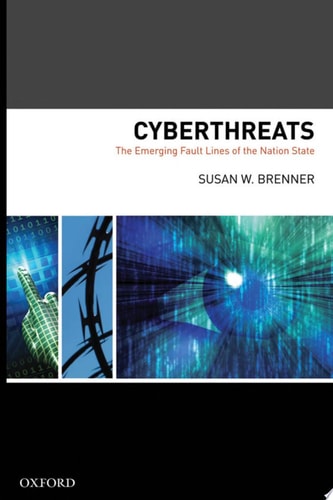
Cyberthreats: The Emerging Fault Lines of the Nation State
0
0
As an Amazon Associate and affiliate partner, Menrva Books earns from qualifying purchases. Learn more
Author Description
As new technologies develop, terrorist groups are developing new methods of attack by using the Internet, and by using cyberspace as a battlefield, it has become increasingly difficult to discover the identity of attackers and bring them to justice. The seemingly limitless boundaries of cyberspace has allowed virtually anyone to launch an attack from a remote and anonymous location. But once these attacks occur, it raises several important questions; who should respond, and how?; how should nation-states effectively deal with a cyber-attack?; and will the United States and other nation-states be able to survive in a world where virtual boundaries are limitless? In Cyberthreats: The Emerging Fault Lines of the Nation State Susan Brenner gives a thorough explanation of how military and law enforcement personnel respond to these attacks and why bringing cyber-terrorist to justice can be difficult and sometimes impossible.
Menrva's Summary
THE THESIS
This book investigates the destabilizing impact of cyber-attacks on the traditional concept of the nation-state and the efficacy of current legal and military responses. Susan W. Brenner, a recognized authority on cybercrime and law, utilizes a framework of international relations and criminal justice to analyze how the anonymity of cyberspace complicates sovereignty. She argues that the borderless nature of digital warfare necessitates a fundamental shift in how governments define, detect, and prosecute threats originating from non-state and state-sponsored actors.
THE SCOPE MAP
What You Will Find
- Analysis of the technical and jurisdictional challenges in identifying anonymous cyber-attackers.
- Examination of the limitations inherent in current international law regarding digital conflict.
- Evaluation of the roles played by military and law enforcement agencies in responding to cyber-terrorism.
Scope Limits
- The text does not provide a technical manual for network defense or specific software security protocols.
- It does not offer a comprehensive history of every major cyber-attack in the 21st century.
THE AUTHORITY PERSPECTIVE
Experts frequently cite this work as a foundational text for understanding the intersection of digital technology and national security policy. Readers often note the academic density of the prose, which provides a rigorous examination of the legal hurdles facing modern nation-states.
Page Count:
320
Publication Date:
2009-01-01
Publisher:
Oxford University Press
ISBN-10:
0190452560
ISBN-13:
9780190452568
Science & Technology
Politics
Law Enforcement
Reference
Technology
Political Crimes And Offenses
Systems Theory
Kindle Store
History & Culture
Security
Computer - Internet
Criminal Law
National security
Words Language & Grammar
Specific Topics
Internet & WWW
Linguistics
Terrorism
Social Aspects
Kindle eBooks
Cybersecurity
Trades & Technology
Technology & Engineering
Categories
Engineering
Computer Networks
Professional Career & Trade
Community Tags
Similar Books