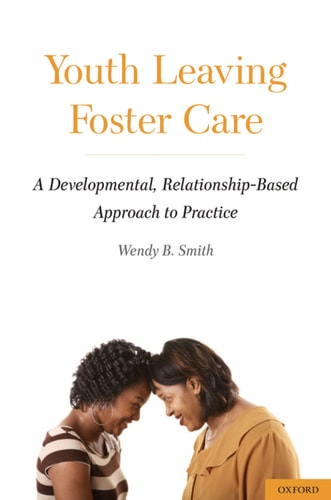
Youth Leaving Foster Care: A Developmental, Relationship-Based Approach to Practice
0
0
As an Amazon Associate and affiliate partner, Menrva Books earns from qualifying purchases. Learn more
Author Description
Each year more than 25,000 youth age out of the American foster care system to face uncertain futures as young adults. Many of them have experienced the trauma of abuse, neglect, disrupted family relationships, and multiple foster care placements. The past two decades have seen increased funding and services in a society-wide attempt to mitigate the effects of such childhood adversity, but a consistent pattern of loss and broken attachments adds up. Development and education are severely compromised. A quarter of youth experience homelessness after exiting care; 25-50% will not complete high school, and only 3-6% will graduate college. Four years after leaving care, less than half are employed, and their earnings remain well below the poverty line. Rates of mental health disorders, early pregnancy and parenthood, and involvement in the criminal justice system are all heightened.Youth Leaving Foster Care is the first comprehensive text to focus on youth emerging from care, offering a new theoretical framework to guide programs, policies, and services. The book argues that understanding infant, child, and adolescent development; attachment experiences and disruptions; and the impacts of unresolved trauma and loss on development are critical to improving long-term outcomes. It provides an overview of the foster care context, detailed discussion of the effects of maltreatment on development from infancy through young adulthood, and common mental health problems and treatment recommendations. It includes a discussion of delinquency and the juvenile justice system, as well as issues facing pregnant and parenting youth, LGBT youth, and youth with disabilities. Presenting the best practices in transitional living programs and policy and research recommendations, this crucial guide also reviews and summarizes the latest research, which are enhanced with illustrative case vignettes. Each mental health and program chapter concludes with key practice principles reflecting the r
Menrva's Summary
THE THESIS
This text investigates how a developmental and relationship-based framework can improve long-term outcomes for youth transitioning out of the foster care system. Wendy B. Smith, an expert in child welfare and social work, synthesizes developmental psychology with current foster care data to argue that systemic failures often stem from a lack of focus on attachment and trauma. The book proposes that practitioners must prioritize the psychological impacts of early maltreatment to effectively support young adults as they navigate independence.
THE SCOPE MAP
What You Will Find
- Analysis of developmental stages from infancy through young adulthood in the context of foster care.
- Theoretical frameworks for addressing attachment disruptions and unresolved trauma.
- Practice principles for transitional living programs and policy recommendations.
- Case vignettes illustrating the application of clinical and social work interventions.
Scope Limits
- The text focuses primarily on the American foster care system and may not account for international variations in social services.
- It does not provide an exhaustive manual for every specific state-level policy variation.
THE AUTHORITY PERSPECTIVE
Professionals in the field of social work and child welfare identify this work as a foundational text for understanding the intersection of trauma-informed care and transitional support. Readers frequently note the academic density of the prose, which serves as a comprehensive resource for practitioners and policymakers alike.
Page Count:
309
Publication Date:
2011-01-01
Publisher:
Oxford University Press
ISBN-10:
0190452048
ISBN-13:
9780190452049
Psychology
Social Work
Sociology
Introduction to Social WorkWelfare
Public Policy
Education
Child Welfare
Community Tags
Similar Books