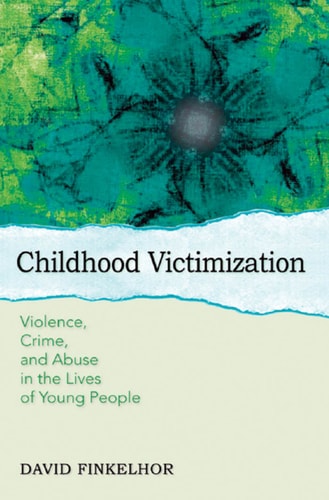
Childhood Victimization: Violence, Crime, and Abuse in the Lives of Young People
0
0
As an Amazon Associate and affiliate partner, Menrva Books earns from qualifying purchases. Learn more
Author Description
Children are the most criminally victimized segment of the population, and a substantial number face multiple, serious "poly-victimizations" during a single year. And despite the fact that the priority emphasis in academic research and government policy has traditionally gone to studying juvenile delinquents, children actually appear before authorities more frequently as victims than as offenders. But at the same time, the media and many advocates have failed to note the good news: rates of sexual abuse, child homicide, and many other forms of victimization declined dramatically after the mid-1990s, and some terribly feared forms of child victimization, like stereotypical stranger abduction, are remarkably uncommon. The considerable ignorance about the realities of child victimization can be chalked up to a field that is fragmented, understudied, and subjected to political demagoguery. In this persuasive book, David Finkelhor presents a comprehensive new vision to encompass the prevention, treatment, and study of juvenile victims, unifying conventional subdivisions like child molestation, child abuse, bullying, and exposure to community violence. Developmental victimology, his term for this integrated perspective, looks at child victimization across childhood's span and yields fascinating insights about how to categorize juvenile victimizations, how to think about risk and impact, and how victimization patterns change over the course of development. The book also provides a valuable new model of society's response to child victimization - what Finkelhor calls the Juvenile Victim Justice System - and a fresh way of thinking about barriers that victims and their families encounter when seeking help. These models will be very useful to anyone seeking to improve the way we try to help child victims. Crimes against children still happen far too often, but by proposing a new framework for thinking about the issue, Childhood Victimization opens a promising door to reducing
Menrva's Summary
THE THESIS
How can society move beyond fragmented, reactive approaches to better understand and mitigate the pervasive reality of child victimization? David Finkelhor, a prominent researcher in the field of juvenile victimization, synthesizes decades of data to challenge prevailing misconceptions about the prevalence and nature of crimes against children. He introduces the framework of 'developmental victimology,' which integrates disparate areas of study—such as bullying, abuse, and community violence—into a unified model that accounts for the developmental trajectory of young people. By analyzing long-term trends and societal responses, Finkelhor argues for a more cohesive 'Juvenile Victim Justice System' to improve prevention and support mechanisms.
THE SCOPE MAP
What You Will Find
- Analysis of poly-victimization patterns across different developmental stages.
- A proposed framework for a unified Juvenile Victim Justice System.
- Statistical trends regarding the decline of specific victimization types since the mid-1990s.
- Evaluation of barriers faced by victims and families when navigating support services.
Scope Limits
- The text focuses primarily on the systemic and sociological aspects of victimization rather than clinical therapeutic interventions for individual trauma.
- It does not provide an exhaustive legal guide for specific jurisdictions.
THE AUTHORITY PERSPECTIVE
Experts recognize this work as a foundational text that successfully bridges the gap between academic research and public policy. Readers frequently note the clarity of the author's arguments despite the complex and often distressing nature of the subject matter.
Page Count:
242
Publication Date:
2008-01-01
Publisher:
Oxford University Press
ISBN-10:
0190451068
ISBN-13:
9780190451066
Psychology
Introduction to Social WorkWelfare
Criminology
Social Work
Public Policy
Sociology
Community Tags
Similar Books