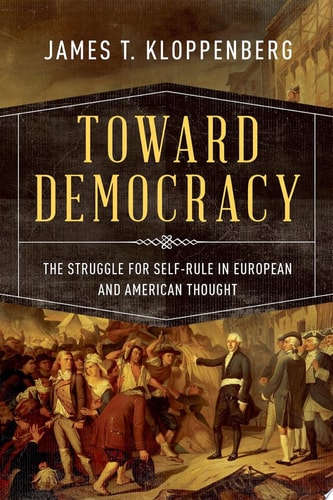
Toward Democracy
0
0
As an Amazon Associate and affiliate partner, Menrva Books earns from qualifying purchases. Learn more
Author Description
In This Magnificent And Encyclopedic Overview, James T. Kloppenberg Presents The History Of Democracy From The Perspective Of Those Who Struggled To Envision And Achieve It. The Story Of Democracy Remains One Without An Ending, A Dynamic Of Progress And Regress That Continues To Our Own Day. In The Classical Age Democracy Was Seen As The Failure Rather Than The Ideal Of Good Governance. Democracies Were Deemed Chaotic And Bloody, Indicative Of Rule By The Rabble Rather Than By Enlightened Minds. Beginning In The 16th And 17th Centuries, However, First In Europe And Then In England's North American Colonies, The Reputation Of Democracy Began To Rise, Resulting In Changes That Were Sometimes Revolutionary And Dramatic, Sometimes Gradual And Incremental. Kloppenberg Offers A Fresh Look At How Concepts And Institutions Of Representative Government Developed And How Understandings Of Self-rule Changed Over Time On Both Sides Of The Atlantic. Notions About What Constituted True Democracy Preoccupied Many Of The Most Influential Thinkers Of The Western World, From Montaigne And Roger Williams To Milton And John Locke; From Rousseau And Jefferson To Wollstonecraft And Madison; And From De Tocqueville And J. S. Mill To Lincoln And Frederick Douglass. Over Three Centuries, Explosive Ideas And Practices Of Democracy Sparked Revolutions--english, American, And French--that Again And Again Culminated In Civil Wars, Disastrous Failures Of Democracy That Impeded Further Progress. Comprehensive, Provocative, And Authoritative, Toward Democracy Traces Self-government Through Three Pivotal Centuries. The Product Of Twenty Years Of Research And Reflection, This Momentous Work Reveals How Nations Have Repeatedly Fallen Short In Their Attempts To Construct Democratic Societies Based On The Principles Of Autonomy, Equality, Deliberation, And Reciprocity That They Have Claimed To Prize. Underlying This Exploration Lies Kloppenberg's Compelling Conviction That Democracy Was And Remains An
Menrva's Summary
THE THESIS
This work investigates the historical evolution of democracy by examining the intellectual and practical struggles of those who sought to define and implement self-government over three centuries. James T. Kloppenberg, a distinguished historian of American and European thought, utilizes extensive archival research and philosophical analysis to argue that democracy is a volatile, ongoing process characterized by a constant tension between progress and regression. He posits that the core principles of autonomy, equality, deliberation, and reciprocity have consistently served as the aspirational foundation for democratic societies, even as those societies have frequently failed to live up to their own ideals.
THE SCOPE MAP
What You Will Find
- A detailed examination of democratic development from the 16th century through the 19th century.
- Analysis of key political thinkers including Montaigne, Locke, Rousseau, Jefferson, and Frederick Douglass.
- A comparative study of political shifts in Europe and North America.
Scope Limits
- The text focuses primarily on Western political traditions and does not provide a global survey of non-Western democratic movements.
- The narrative concludes before the full complexities of 20th and 21st-century global democratic crises.
THE AUTHORITY PERSPECTIVE
Scholars and critics recognize this volume as a rigorous, comprehensive synthesis of intellectual history that demands significant attention from the reader. Experts frequently highlight the text as a foundational resource for understanding the philosophical underpinnings of modern representative government.
Page Count:
320
Publication Date:
2016-01-01
Publisher:
Oxford University Press
ISBN-10:
0190457678
ISBN-13:
9780190457679
Philosophy
History
Western Civilization
Democracy
Community Tags
Similar Books