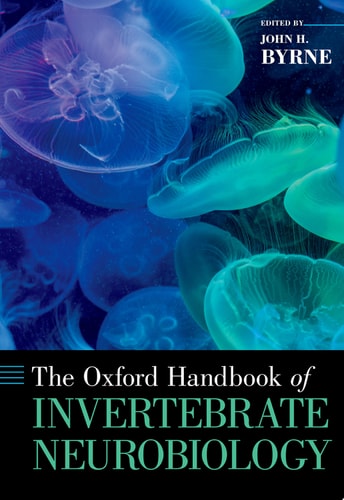
The Oxford Handbook of Invertebrate Neurobiology
0
0
As an Amazon Associate and affiliate partner, Menrva Books earns from qualifying purchases. Learn more
Author Description
Invertebrates have proven to be extremely useful model systems for gaining insights into the neural and molecular mechanisms of sensory processing, motor control and higher functions such as feeding behavior, learning and memory, navigation, and social behavior. A major factor in their enormous contributions to neuroscience is the relative simplicity of invertebrate nervous systems. In addition, some invertebrates, primarily the molluscs, have large cells, which allow analyses to take place at the level of individually identified neurons. Individual neurons can be surgically removed and assayed for expression of membrane channels, levels of second messengers, protein phosphorylation, and RNA and protein synthesis. Moreover, peptides and nucleotides can be injected into individual neurons. Other invertebrate model systems such as Drosophila and Caenorhabditis elegans offer tremendous advantages for obtaining insights into the neuronal bases of behavior through the application of genetic approaches. The Oxford Handbook of Invertebrate Neurobiology reviews the many neurobiological principles that have emerged from invertebrate analyses, such as motor pattern generation, mechanisms of synaptic transmission, and learning and memory. It also covers general features of the neurobiology of invertebrate circadian rhythms, development, and regeneration and reproduction. Some neurobiological phenomena are species-specific and diverse, especially in the domain of the neuronal control of locomotion and camouflage. Thus, separate chapters are provided on the control of swimming in annelids, crustaea and molluscs, locomotion in hexapods, and camouflage in cephalopods. Unique features of the handbook include chapters that review social behavior and intentionality in invertebrates. A chapter is devoted to summarizing past contributions of invertebrates to the understanding of nervous systems and identifying areas for future studies that will continue to advance that understanding.
Menrva's Summary
THE THESIS
This volume investigates the fundamental neurobiological principles derived from the study of invertebrate model systems and their contribution to our broader understanding of nervous system function. Edited by John H. Byrne, a distinguished neuroscientist, the handbook synthesizes decades of research into how the relative simplicity of invertebrate nervous systems allows for precise molecular and cellular analysis. The text argues that these organisms provide unique, accessible platforms for examining complex behaviors, synaptic transmission, and genetic mechanisms that are often difficult to isolate in more complex vertebrate models.
THE SCOPE MAP
What You Will Find
- Detailed analysis of neural and molecular mechanisms in sensory processing and motor control.
- Methodologies for studying individually identified neurons, including surgical removal and intracellular assays.
- Comparative studies on circadian rhythms, development, regeneration, and reproduction across various phyla.
- Specific chapters on locomotion and camouflage in annelids, crustaceans, molluscs, and hexapods.
Scope Limits
- The text focuses primarily on invertebrate models and does not provide an exhaustive comparative analysis of vertebrate neurobiology.
- It does not serve as an introductory textbook for general biology but assumes a background in neuroscience.
THE AUTHORITY PERSPECTIVE
Experts recognize this handbook as a comprehensive reference work that successfully bridges the gap between cellular-level molecular biology and systemic behavioral analysis. Researchers frequently cite the volume for its technical depth and its utility in identifying future directions for neurobiological inquiry.
Page Count:
608
Publication Date:
2019-01-01
Publisher:
Oxford University Press
ISBN-10:
0190456779
ISBN-13:
9780190456771
Science
Biology
Neuroscience
Reference
Academic
Invertebrate Zoology
Community Tags
Other Editions(3)

Similar Books








Reader Comments
Share Your Thoughts
No comments yet. Be the first to share your thoughts!