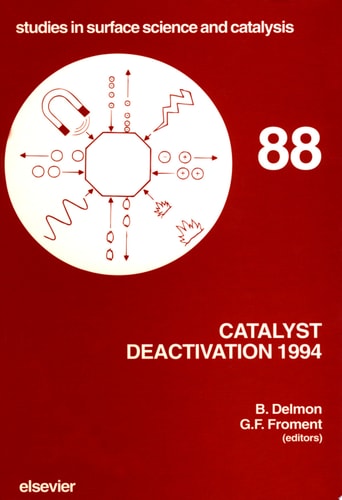
Catalyst Deactivation 1994
0
0
As an Amazon Associate and affiliate partner, Menrva Books earns from qualifying purchases. Learn more
Author Description
Catalyst Deactivation 1994 was an expansion of earlier, highly successful symposia. The objective of the symposium was to promote a scientific approach of the phenomenon of catalyst deactivation which will contribute to the development of catalysts which are less subject to structural transformations and more resistant to poisons and coke formation. These aspects are dealt with in 12 plenary lectures, 48 oral presentations and 35 poster papers, which were critically selected from an impressive response from some 30 countries.Both fundamental and applied aspects were covered. The deactivation of catalysts in important industrial processes like fluid bed catalytic cracking hydrotreatment, hydrodesulfurization, catalytic reforming, hydrodenitrogenation, steam reforming, hydrodemetallization, hydrocracking, Fischer-Tropsch synthesis, propane dehydrogenation, phthalic anhydride synthesis received considerable attention. Mechanisms of poisoning, sintering and coking were further investigated and modelled and new experimental techniques for the characterization and the quantification of deactivation were also introduced.
Menrva's Summary
THE THESIS
This symposium proceedings addresses the scientific phenomenon of catalyst deactivation, aiming to foster the development of more robust catalysts. The objective was to promote a scientific approach to catalyst deactivation, leading to catalysts less prone to structural changes and more resistant to poisons and coke formation. The work compiles 12 plenary lectures, 48 oral presentations, and 35 poster papers, critically selected from submissions across approximately 30 countries. Both fundamental and applied aspects of deactivation were explored, with significant attention given to industrial processes.
THE SCOPE MAP
- Mechanisms of poisoning, sintering, and coking in catalysts.
- Modeling of catalyst deactivation processes.
- New experimental techniques for catalyst characterization and quantification.
- Detailed examination of catalyst deactivation in key industrial processes including fluid bed catalytic cracking, hydrotreatment, hydrodesulfurization, catalytic reforming, hydrodenitrogenation, steam reforming, hydrodemetallization, hydrocracking, Fischer-Tropsch synthesis, propane dehydrogenation, and phthalic anhydride synthesis.
THE AUTHORITY PERSPECTIVE
This collection of papers from the 1994 symposium on Catalyst Deactivation represents a significant compilation of research in the field. The breadth of topics covered, from fundamental mechanisms to applied industrial processes, suggests a comprehensive overview for researchers and engineers. The critical selection of papers from a global response indicates a high standard of contributions. The focus on developing less susceptible catalysts highlights the practical implications of the research presented.
Page Count:
683
Publication Date:
1994-09-08
Publisher:
Elsevier
ISBN-10:
0080887384
ISBN-13:
9780080887388
Non-Fiction
Science
Chemical Engineering
Catalysis
Industrial Processes
Community Tags
Similar Books