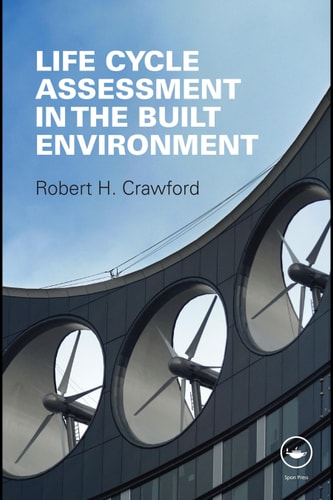
Life Cycle Assessment in the Built Environment
0
0
As an Amazon Associate and affiliate partner, Menrva Books earns from qualifying purchases. Learn more
Author Description
Life cycle assessment enables the identification of a broad range of potential environmental impacts occurring across the entire life of a product, from its design through to its eventual disposal or reuse. The need for life cycle assessment to inform environmental design within the built environment is critical, due to the complex range of materials and processes required to construct and manage our buildings and infrastructure systems. After outlining the framework for life cycle assessment, this book uses a range of case studies to demonstrate the innovative input-output-based hybrid approach for compiling a life cycle inventory. This approach enables a comprehensive analysis of a broad range of resource requirements and environmental outputs so that the potential environmental impacts of a building or infrastructure system can be ascertained. These case studies cover a range of elements that are part of the built environment, including a residential building, a commercial office building and a wind turbine, as well as individual building components such as a residential-scale photovoltaic system. Comprehensively introducing and demonstrating the uses and benefits of life cycle assessment for built environment projects, this book will show you how to assess the environmental performance of your clients’ projects, to compare design options across their entire life and to identify opportunities for improving environmental performance.
Menrva's Summary
THE THESIS
How can life cycle assessment (LCA) be effectively applied to the built environment to quantify and mitigate the environmental impacts of infrastructure and building projects? Robert M. M. Crawford provides a rigorous framework for evaluating the environmental performance of construction projects from design through disposal. By detailing the input-output-based hybrid approach, the author offers a methodology for compiling comprehensive life cycle inventories that account for complex material and process requirements. The text serves as a technical manual for professionals seeking to compare design options and optimize resource efficiency across the entire lifespan of a structure.
THE SCOPE MAP
What You Will Find
- A structured framework for conducting life cycle assessments within the construction industry.
- Methodologies for the input-output-based hybrid approach to life cycle inventory compilation.
- Case studies covering residential buildings, commercial office buildings, wind turbines, and photovoltaic systems.
- Analytical tools for comparing design alternatives and identifying opportunities for environmental improvement.
THE AUTHORITY PERSPECTIVE
Experts identify this work as a technical resource for architects and engineers aiming to integrate sustainability into project management. Readers frequently note the academic density of the prose and the practical utility of the included case studies for real-world application.
Page Count:
269
Publication Date:
2011-01-01
Publisher:
Spons Architecture Price Book
ISBN-10:
020386817X
ISBN-13:
9780203868171
Architecture
Recycling
Service life
Engineering
Sustainability
Product life cycle
Construction
Buildings
Community Tags
Similar Books