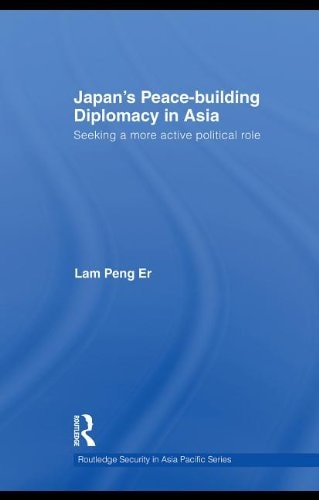
Japan's Peace-Building Diplomacy in Asia: Seeking a More Active Political Role
0
0
As an Amazon Associate and affiliate partner, Menrva Books earns from qualifying purchases. Learn more
Author Description
The conventional portrayal of Japan’s role in international affairs is of a passive political player which – despite its position as the world’s second largest economic power – punches below its weight on the world stage: its foreign policy driven by Washington, mercantilism and constrained by domestic pacifism. This book examines Japan’s emerging identity as an important participant in conflict prevention and peace-building in Southeast and South Asia, demonstrating that Japan has increasingly sought a positive and active political role commensurate with its economic pre-eminence. The book considers Japanese involvement in many of the region’s most serious recent conflicts: including Japan’s part in the brokering and maintaining of peace in Cambodia, which in 1992 saw the first dispatch of troops abroad by Tokyo since the end of World War II, and the attempts to bring peace to Aceh, Sri Lanka, East Timor and Mindanao. The Japanese example, when compared with other countries prominent in the fields of conflict prevention, suggests that Tokyo – given its pacifist strategic culture – relies on diplomacy and Official Development Assistance rather than peace enforcement through military means. Overall, this book provides a lucid appraisal of Japan’s overall foreign policy, as well as its new role in conflict prevention and peace-building - analysing the reasons behind this shift towards an active international role and assessing the degree of success it has enjoyed.
Menrva's Summary
THE THESIS
This book investigates whether Japan has successfully transitioned from a passive economic power to an active political participant in international conflict prevention and peace-building within Asia. Author Lam Peng Er, a specialist in Japanese politics and international relations, utilizes a framework of strategic culture to analyze Tokyo's foreign policy shifts. By examining Japan's reliance on diplomacy and Official Development Assistance rather than military force, the text argues that Japan is actively seeking a political role commensurate with its economic status. The analysis evaluates the motivations behind this shift and assesses the efficacy of Japan's interventions in regional conflicts.
THE SCOPE MAP
What You Will Find
- Detailed case studies of Japanese involvement in Cambodia, Aceh, Sri Lanka, East Timor, and Mindanao.
- An analysis of the impact of Japan's pacifist strategic culture on its foreign policy tools.
- A comparative assessment of Japan's peace-building methodology versus other international actors.
- An evaluation of the role of Official Development Assistance as a primary instrument of Japanese diplomacy.
THE AUTHORITY PERSPECTIVE
Experts recognize this work as a significant contribution to the study of Japanese foreign policy and regional diplomacy. Readers frequently note the clarity of the author's analysis regarding the tension between Japan's pacifist constraints and its desire for greater international political influence.
Page Count:
192
Publication Date:
2009-05-15
Publisher:
Routledge
ISBN-10:
0203877810
ISBN-13:
9780203877814
Japan
Asian Studies
Peace studies
International relations
Peace Building
Asia
Japanese History
Diplomacy
Community Tags
Similar Books