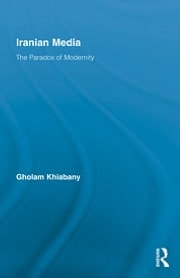
Iranian Media: The Paradox of Modernity
0
0
As an Amazon Associate and affiliate partner, Menrva Books earns from qualifying purchases. Learn more
Author Description
The Post-revolutionary State In Iran Has Tried To Amalgamate 'sharia With Electricity' And Modernity With What It Considers As 'islam'. While Sympathetic To Private Capital, Through Quasi Anti-capitalist Politics, The State Began To Restrict Market-relations, Confiscate Major Assets Of Sections Of The Iranian Bourgeoisie, And Nationalize Major Aspects Of Iran's Industry, Including Its Communications System. Since The End Of War With Iraq And The Start Of The Process Of 'reconstruction', Market-driven Development And Economic Policies Have Been Key Aims Of The State.
Menrva's Summary
THE THESIS
This book investigates the complex interplay between the Iranian state, religious ideology, and the evolution of media systems in the post-revolutionary era. Gholam Khiabany, a scholar specializing in media and communication, examines how the Islamic Republic attempts to reconcile traditional Sharia-based governance with the demands of modern technological and economic infrastructure. By analyzing the transition from state-controlled nationalization to market-driven reconstruction, the author provides a framework for understanding how communication systems are utilized to maintain political control while navigating global economic pressures.
THE SCOPE MAP
What You Will Find
- Analysis of the historical shift from post-revolutionary nationalization to market-oriented media policies.
- Examination of the tension between religious doctrine and modern communication theory.
- Case studies on the Iranian press, broadcasting, and the gendered nature of the public sphere.
- Evaluation of the institutional interests and regulatory mechanisms governing media policy in the Islamic Republic.
THE AUTHORITY PERSPECTIVE
Experts recognize this work as a critical contribution to the study of media policy within authoritarian contexts. Readers frequently note the academic density of the prose, which serves as a foundational text for those studying the intersection of state power and communication in the Middle East.
Page Count:
251
Publication Date:
2010-01-01
Publisher:
Routledge
ISBN-10:
0203876415
ISBN-13:
9780203876411
Mass media
Media Studies
Sociology
Massamedia
Women and journalism
Communication
Freedom of the press
Womens History
Government And The Press
Community Tags
Similar Books