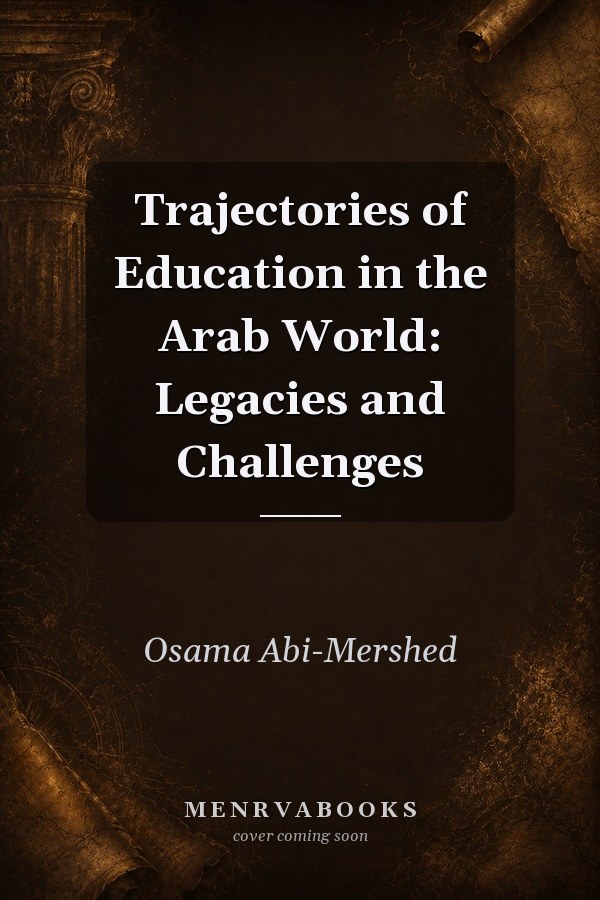
Trajectories of Education in the Arab World: Legacies and Challenges
0
0
As an Amazon Associate and affiliate partner, Menrva Books earns from qualifying purchases. Learn more
Author Description
Trajectories of Education in the Arab World gives a broad yet detailed historical and geographical overview of education in Arab countries. Drawing on pre-modern and modern educational concepts, systems, and practices in the Arab world, this book examines the impact of Western cultural influence, the opportunities for reform and the sustainability of current initiatives. The contributors bring together analyses and case studies of educational standards and structures in the Arab world, from the classical Islamic period to contemporary local and international efforts to re-define the changing needs and purposes of Arab education in the contexts of modernization, multiculturalism, and globalization. Taking a thematic and chronological approach, the first section contrasts the traditional notions, approaches, and standards of education with the changes that were initiated or imposed by European influences in the nineteenth century. The chapters then focus on the role of modern state-based educational systems in constructing and preserving national identities, cultures, and citizenries and concentrates on the role of education in state-formation and the reproduction of socio-political hierarchies. The success of educational reforms and policy-making is then assessed, offering perspectives on future trends and prospects for generating institutional and organizational change. This book will be of interest to graduate and postgraduate students and scholars of education, history, Arab and Islamic history and the Middle East and North Africa.
Menrva's Summary
THE THESIS
This volume investigates how historical legacies and modern geopolitical pressures have shaped the evolution of educational systems across the Arab world. Edited by Osama Abi-Mershed, the work synthesizes contributions from various scholars to analyze the transition from classical Islamic pedagogical traditions to contemporary state-run models. The text argues that education serves as a primary mechanism for state-formation, the construction of national identity, and the maintenance of socio-political hierarchies within the region.
THE SCOPE MAP
What You Will Find
- Historical analysis of educational shifts from the classical Islamic period through the nineteenth-century European influence.
- Examination of the role of modern state-based systems in fostering national identity and citizenship.
- Case studies assessing the efficacy of recent educational reforms and policy-making initiatives.
- Theoretical frameworks addressing the impact of globalization, multiculturalism, and modernization on regional curricula.
THE AUTHORITY PERSPECTIVE
Scholars and graduate students frequently cite this text as a comprehensive resource for understanding the intersection of history and policy in Middle Eastern education. Experts highlight the book's thematic structure as particularly effective for navigating the complex evolution of regional institutional standards.
Page Count:
0
Publication Date:
2009-01-01
Publisher:
Routledge
ISBN-10:
0203873750
ISBN-13:
9780203873755
History
Education
Sociology
Community Tags
Similar Books