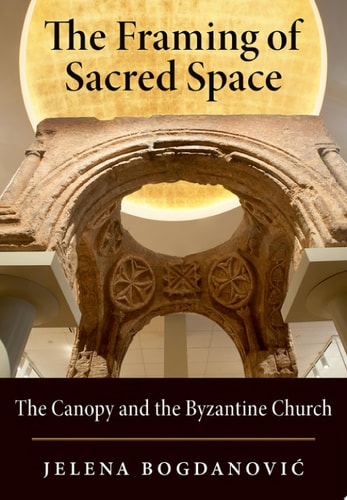
The Framing of Sacred Space
0
0
As an Amazon Associate and affiliate partner, Menrva Books earns from qualifying purchases. Learn more
Author Description
The Framing Of Sacred Space Offers The First Topical Study Of Canopies As Essential Spatial And Symbolic Units In Byzantine-rite Churches. Centrally Planned Columnar Structures--typically Comprised Of Four Columns And A Roof--canopies Had A Critical Role In The Modular Processes Of Church Design, From Actual Church Furnishings In The Shape Of A Canopy To The Church's Structural Core. As Architectonic Objects Of Basic Structural And Design Integrity, Canopies Integrate An Archetypical Image Of Architecture And Provide Means For An Innovative Understanding Of The Materialization Of The Idea Of The Byzantine Church And Its Multi-focal Spatial Presence. The Framing Of Sacred Space Considers Both The Material And Conceptual Framing Of Sacred Space And Explains How The Canopy Bridges The Physical And Transcendental Realms. As A Crucial Element Of Church Design In The Byzantine World, A World That Gradually Abandoned The Basilica As A Typical Building Of Roman Imperial Secular Architecture, The Canopy Carried Tectonic And Theological Meanings And, Through Vaulted, Canopied Bays And Recognizable Byzantine Domed Churches, Established Organic Architectural, Symbolic, And Sacred Ties Between The Old And New Covenants. In Such An Overarching Context, The Canopy Becomes An Architectural Parti, A Vital Concept And Dynamic Design Principle That Carries The Essence Of The Byzantine Church. The Framing Of Sacred Space Highlights Significant Factors In Understanding Canopies Through Specific Architectural Settings And The Byzantine Concepts Of Space, Thus Also Contributing To Larger Debates About The Creation Of Sacred Space And Related Architectural Taxonomy.
Menrva's Summary
THE THESIS
How did the canopy function as a fundamental architectural and symbolic unit in the design of Byzantine-rite churches? Jelena Bogdanovic, an expert in architectural history, examines the canopy not merely as a furnishing but as a core structural and conceptual element. By analyzing the transition from Roman basilica forms to the domed Byzantine church, the author argues that the canopy served as a bridge between physical construction and transcendental theology.
THE SCOPE MAP
What You Will Find
- Analysis of centrally planned columnar structures in Byzantine architecture
- Examination of the canopy as a modular design principle
- Discussion of the architectural transition from Roman secular forms to Byzantine sacred spaces
- Exploration of the theological symbolism inherent in vaulted, canopied bays
Scope Limits
- The study focuses specifically on Byzantine-rite churches and does not provide an exhaustive survey of Western Gothic or Romanesque canopy traditions.
THE AUTHORITY PERSPECTIVE
Scholars recognize this work as a specialized contribution to the study of Byzantine architectural taxonomy and spatial theory. Readers frequently note the academic density of the prose, which is intended for researchers and students of architectural history.
Page Count:
416
Publication Date:
2017-01-01
Publisher:
Oxford University Press
ISBN-10:
0190465190
ISBN-13:
9780190465193
Architecture
Theology
Religious architecture
Art History
Community Tags
Similar Books