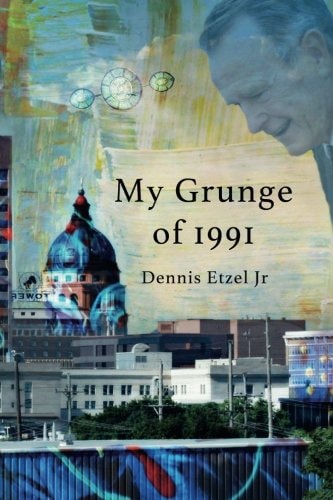
My Grunge of 1991
0
0
As an Amazon Associate and affiliate partner, Menrva Books earns from qualifying purchases. Learn more
Author Description
Dennis Etzel Jr.'s precise prose poetry examines injustice, Star Trek, George Bush's oft-ridiculous internal monologue, and a vague, nebulous past. Didacticism is just another device in My Grunge of 1991, one that makes technical yet poetic points about feminism and the nature of utopia. Etzel also challenges the idea of pure art, instead using his meanders to promote a utopia to be striven for. But "Does the Reader know the Watcher is watching him read as he reads about the Watcher?" Tune in to accompany Etzel as he interrogates our surveillance state. —Amy King, The Missing Museum Like the smart My Secret Wars of 1984, Dennis Etzel Jr.'s My Grunge of 1991 sings with intensity. Collaging pop culture, feminist scholarship, and politics from that year, these prose poems question. Etzel asks, “You doubt my honor as a warrior?” and “Who made my home a McHome?” If in Fast-Food Sonnets, Etzel explores the meaning of customer service work, here Etzel turns the focus to the ways culture works on the self. Reading this new collection is a lovely disorientating echo of dictions that transport. Like a Kansas tornado with its resonating swirl, readers of My Grunge of 1991 land among Happy Meals, Star Trek: The Next Generation episodes, and Desert Storm coverage. In the muzak, grunge stars Pearl Jam, Soundgarden, and Nirvana voice and scream. With lines arranged alphabetically across 75 poems, My Grunge of 1991 offers a sound answer to Dana Gioia’s 1991 question, Can Poetry Matter? With a poet’s ear like Etzel, it can. —Laura Madeline Wiseman, Through a Certain Forest Within the poem, “a list of alphabetized semblances for keeping track of occurrences out of post-trauma,” the speaker negotiates a way between quotations. Even pre-9/11, “we [were] no longer safe,” so he cloaks himself in “Grunge music, comic books, and Star Trek.” Amidst the dystopia of the First Gulf War, Dennis Etzel, Jr. brilliantly imagines a utopia where “there are no boy or girl Happy Meal toys – only H
Menrva's Summary
THE PULSE
A speaker navigates the fractured landscape of 1991, grappling with injustice, surveillance, and the elusive nature of utopia. The prose poems in this collection examine themes of feminism and the societal impact of the First Gulf War, challenging the notion of pure art by using didacticism to promote an ideal future. The narrative framework is characterized by a collaging of pop culture references, feminist scholarship, and political commentary from the era, creating a disorienting yet resonant echo of various dictions. The speaker seeks to understand and critique the surveillance state while simultaneously envisioning a better world, using elements like grunge music, comic books, and Star Trek as a form of cloaking.
INSIDE THE PAGES
- Prose poetry format with lines arranged alphabetically across 75 poems.
- Examines themes of injustice and the nature of utopia.
- Interrogates the surveillance state and societal control.
- Collages pop culture (Star Trek, Happy Meals, grunge music) with feminist scholarship and politics.
- References George Bush's internal monologue and the First Gulf War.
- Challenges the idea of pure art by incorporating didactic elements.
- Explores the meaning of culture's influence on the self, drawing parallels to customer service work.
- Poses questions about honor, belonging, and the reader's perception.
THE COLLECTIVE ECHO
The collection is praised for its precise prose and its ability to make technical yet poetic points about feminism and utopia, as noted by Amy King. Laura Madeline Wiseman highlights the book's intensity, its collaging of disparate elements, and its disorienting yet transportive effect, comparing its resonance to a Kansas tornado. The work is seen as a thoughtful response to the question of poetry's relevance, with Etzel's poetic ear making it matter. The poems are described as a way for the speaker to negotiate between quotations and find safety amidst pre-9/11 anxieties and the dystopia of the First Gulf War.
Page Count:
98
Publication Date:
2017-01-01
Publisher:
Blazevox Books
ISBN-10:
160964297X
ISBN-13:
9781609642976
Politics
Fiction
Poetry
Feminism
Prose Poetry
Pop Culture
Community Tags
Similar Books