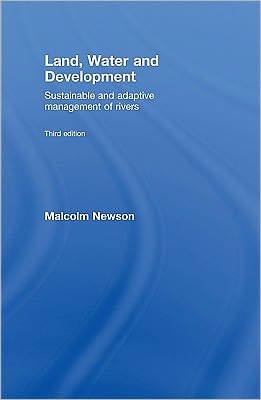
Land, Water and Development: Sustainable and Adaptive Management of Rivers
0
0
As an Amazon Associate and affiliate partner, Menrva Books earns from qualifying purchases. Learn more
Author Description
1. A 'world Water Crisis'? Assessing Its Significance Against The History Of Water Management 1.1 Hydraulic Cultures And Religious Codes: Management In Advance Of Science 1.2 Engineering And Science: The Rise Of Hydraulics And Hydrology 1.3 Monks, Mills And Mines: Coordination (but Abuse) Of Rivers In England 1.4 Urbanisation And Industrialisation: A Steep Deterioration 1.5 Environment, The Current 'crisis' And Challenges Of A Sustainable Future 2.^ The River Basin Ecosystem: Basic Biophysical Dynamics, Natural And Modified 2.1 Flow Of Water And Transport Of Sediment 2.1.1 Elementary Fluvial Sediment Transport 2.1.2 Slopes, Channel, Storage Zones 2.1.3 Timescales Of River Basin Dynamics And Concepts Of 'stability' 2.2 Channel Morphology: Indicating Process And State? 2.2.1 Stable'/'unstable' Channels And 'natural' Channel Change 2.2.2 Catchment Sediment Flux, Channel Change And Development Impacts 2.2.3 Hydraulic Geometry, Regime And Channel Design 2.3 Floodplains 2.3.1 Floodplain Formation And Functions: Floods, Aquifers 2.3.2 Floodplain Modifications In The Anthropocene 2.4 Sediment 'delivery' At The Basin Scale: Sources, Pathways And Targets 2.4.1 Sediment Budgets 2.4.2 World Sediment Yields 2.5 Incorporating The Basin Sediment System In Ecosystem Management 2.5.1 Fitting Together Water, Sediment And Biota 3.^ Land-water Interactions: The Evidence Base For Catchment Planning And Management 3.1 Vegetation, Soils And Hydrology: A Humid Climate Perspective 3.1.1 The Hydrological Cycle In Nature And The Role Of Vegetation: 'green' And 'blue' Water 3.1.2 Important Vegetation Canopy Processes 3.1.3 Patterns Of Soil Hydrological Processes 3.2 Groundwater Exploitation And Protection 3.3 Runoff Modifications In Developed River Basins 3.3.1 Modifications To Runoff Volume 3.3.2 Modifications To Runoff Timing 3.3.3 Regulated Rivers, An Introduction 3.4 Land And Water Use/management: Off-site Impacts On Water Quality And Biota 3.4.1 Land Use And The Fine Sediment System 3.4.2
Menrva's Summary
THE THESIS
This text investigates the complex intersection of river basin dynamics and human development to determine how sustainable management practices can mitigate the impacts of industrialization and urbanization on fluvial ecosystems. Malcolm David Newson, a specialist in river management and physical geography, synthesizes historical water management practices with modern biophysical data. He argues that effective river basin management requires a holistic understanding of sediment transport, land-water interactions, and the long-term consequences of human-induced modifications to natural hydrological cycles.
THE SCOPE MAP
What You Will Find
- Historical analysis of hydraulic cultures and the evolution of water management from religious codes to modern engineering.
- Biophysical dynamics of river basins, including sediment transport, channel morphology, and floodplain functions.
- Examination of land-water interactions, specifically the role of vegetation, soil hydrology, and groundwater exploitation.
- Methodologies for integrating sediment budgets and ecosystem management into catchment planning.
THE AUTHORITY PERSPECTIVE
Experts recognize this work as a foundational text for students and professionals in environmental management and physical geography. Readers frequently note the academic density of the prose, which provides a rigorous framework for understanding the technical challenges of river basin sustainability.
Page Count:
448
Publication Date:
2008-01-01
Publisher:
Routledge
ISBN-10:
0203891910
ISBN-13:
9780203891919
Science
Hydrology
Watershed Management
Geography
Sustainability
Community Tags
Similar Books