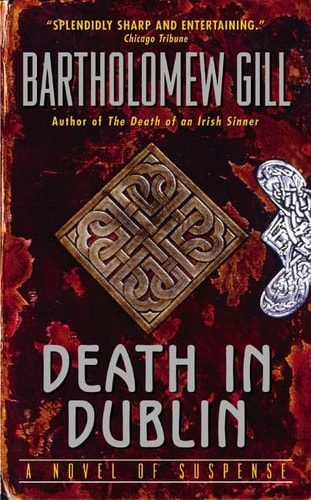
Death in Dublin: A Peter McGarr Mystery
0
0
As an Amazon Associate and affiliate partner, Menrva Books earns from qualifying purchases. Learn more
Author Description
The theft of the Book of Kells -- an exquisite ninth-century amalgam of Christian doctrine and Celtic legend -- from the Trinity College library is, in itself, a most shocking crime. But it is the brutal slaying of a night watchman that throws Peter McGarr of the Dublin Murder Squad into the mix. Forced to share investigative duties equally with a publicity-hungry co-Chief Superintendent, McGarr is soon entangled in a twisted web of murder, thievery, back-biting politics, and dark pagan rituals. And surely more blood will flow as secrets, deceptions, and well-guarded lies come to light -- forcing an intrepid detective to doubt the loyalties of even his closest compatriots -- in a chilling case that threatens to bring about nothing less than the destruction of contemporary Irish society.
Menrva's Summary
THE PULSE
The theft of the Book of Kells and the subsequent murder of a night watchman force Chief Superintendent Peter McGarr into a high-stakes investigation that threatens the stability of Irish society. McGarr must navigate the bureaucratic interference of a publicity-seeking colleague while tracking a killer linked to ancient pagan rituals and modern political corruption. The narrative utilizes a third-person perspective to track McGarr’s methodical approach to evidence collection and his growing suspicion of those within his own department. As the investigation deepens, the protagonist faces physical danger and the logical challenge of untangling a web of historical theft and contemporary violence. The world is defined by the tension between Ireland’s rich cultural heritage and the volatile nature of its modern political landscape.
INSIDE THE PAGES
- Focus on the Dublin Murder Squad procedural protocols
- Integration of historical artifacts as central plot devices
- Exploration of pagan ritualism in a modern setting
- Examination of internal police department politics
- Atmospheric depiction of Dublin’s urban and academic environments
- Emphasis on the psychological toll of investigative work
- Use of red herrings and complex character motivations
- Pacing centered on the gradual revelation of long-held secrets
THE COLLECTIVE ECHO
Readers frequently highlight the author’s ability to balance the technical aspects of a police procedural with the atmospheric weight of Irish history. Discussion often centers on the intricate plotting that connects the theft of a national treasure to a series of brutal murders. Critics note that the protagonist, Peter McGarr, is portrayed with a level of intellectual depth that distinguishes him from standard genre archetypes. The narrative is often praised for its authentic sense of place, effectively capturing the social and political nuances of Dublin. Many readers appreciate how the story avoids simple resolutions, opting instead for a complex exploration of loyalty and deception.
Page Count:
368
Publication Date:
2003-11-25
Publisher:
Harper Collins
ISBN-10:
0060008504
ISBN-13:
9780060008505
Suspense
Crime
Mystery
Mystery Thriller & Suspense
Genre Fiction
Women Sleuths
Self Service
Irish fiction
Custom Stores
Police Procedurals