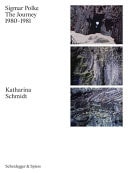
Sigmar Polke: The Journey 1980-1981
0
0
As an Amazon Associate and affiliate partner, Menrva Books earns from qualifying purchases. Learn more
Author Description
Analyzes how German artist Sigmar Polke's travels from Thailand to Tasmania affected his work. In 1980, German artist Sigmar Polke (1941-2010) and Britta Zoellner, a close friend of Polke and an artist herself, set off for Southeast Asia from the vibrant art scene in Germany's Rhineland region. A planned period of quiet work on Bali evolved into a thirteen-month journey from Indonesia via Singapore to Papua New Guinea, Australia, Tasmania, and back to Malaysia and Thailand. Fascinated by the ancient high cultures, the gamelan music and wayang puppet theatre, they increasingly turned their attention to Indigenous societies and their ways of life, but above all to nature and the tropical fauna and flora. Based on Zoellner's diary entries, films, and photographs taken during their extensive tour, as well as other unpublished sources, distinguished art historian Katharina Schmidt traces this little-known journey in chronological detail for the first time. She examines how the intense experience of other cultures and grandiose landscapes, including the discovery of cosmic events through meteorites, moved Polke. She explores how rich nuances of color impressions and other observations and experiences shaped his future art, his concept of nature, and his ideas of space and time. Empathy for the Indigenous peoples' fate under colonial rule, and for a nature endangered by the exploitation of natural resources such as uranium or gold, reveals the attentive and far-sighted qualities of this quiet, concentrated journey.
Menrva's Summary
THE THESIS
This book investigates the profound impact of Sigmar Polke's 1980-1981 journey through Southeast Asia and Oceania on his artistic development. Art historian Katharina Schmidt meticulously reconstructs this thirteen-month expedition, drawing on Britta Zoellner's personal archives, films, photographs, and other unpublished materials. The study examines how Polke's encounters with diverse cultures, ancient traditions, and the natural world, including observations of cosmic events, reshaped his artistic vision, his understanding of nature, and his concepts of space and time. It also highlights Polke's empathetic engagement with Indigenous peoples and his prescient concerns about environmental exploitation.
THE SCOPE MAP
- A chronological account of Sigmar Polke's thirteen-month journey from Southeast Asia to Australia and Tasmania in 1980-1981.
- Analysis of the influence of ancient cultures, gamelan music, and wayang puppet theatre on Polke's work.
- Exploration of Polke's engagement with nature, tropical fauna and flora, and cosmic events like meteorites.
- Examination of how observations and experiences shaped Polke's future art, his concept of nature, and his ideas of space and time.
- Insights into Polke's empathy for Indigenous peoples and his concerns about environmental exploitation, based on Zoellner's diary entries and other sources.
THE AUTHORITY PERSPECTIVE
This scholarly work is positioned as a detailed art historical analysis, likely appealing to academics, art students, and enthusiasts of Sigmar Polke's oeuvre. By grounding its narrative in primary source materials such as diaries and photographs, the book promises a deep dive into a less-explored period of the artist's life. The focus on the intersection of travel, cultural experience, and artistic creation suggests a text that will offer significant new insights into Polke's creative process and thematic evolution.
Page Count:
480
Publication Date:
2026-06-26
Publisher:
Scheidegger and Spiess
ISBN-10:
3039423053
ISBN-13:
9783039423057
Art
Non-Fiction
Biography
Travelogue
Art History
Community Tags
Similar Books