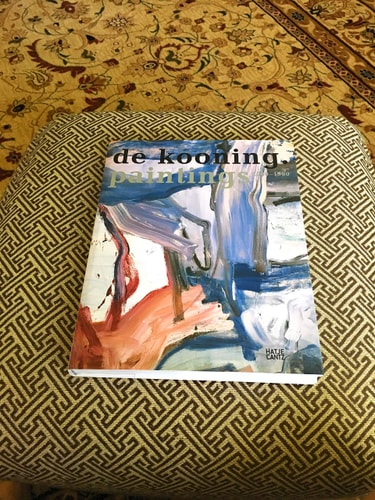
Willem De Kooning: Paintings 1960-1980
0
0
As an Amazon Associate and affiliate partner, Menrva Books earns from qualifying purchases. Learn more
Author Description
Willem de Kooning is celebrated in the United States as one of the most significant artists of the twentieth century and a leading Abstract Expressionist. In Europe, however, the artist has yet to be fully recognized, particularly with regards to his work of the 1960s and 1970s, when he retreated from urban life to live and work on Long Island. This segment of de Kooning's oeuvre bears the imprint of a fundamental experience of the landscape, for it was in these Long Island works that he developed a new style of figuration, characterized by a transformed sense of color and energetic gesture. This period of vigorous, pioneering creativity is illuminated for the first time in this volume, which features a concentrated selection of large-format paintings. In images and essays by Klaus Kertess, Harold Rosenberg and others, the book illustrates how de Kooning's paintings--although recognizable as landscapes--grew abstract under the influence of his intense experience of nature.
Menrva's Summary
THE THESIS
This volume explores the pivotal period of Willem de Kooning's artistic development between 1960 and 1980, a time when he shifted his focus to the landscape of Long Island. The book examines how this environment influenced his style, leading to a new form of figuration marked by vibrant color and dynamic brushwork, a departure from his earlier urban-centric work. It features a curated selection of large-format paintings from this era, showcasing his vigorous and pioneering creativity. Through essays and images, the publication illustrates the profound connection between de Kooning's intense experience of nature and the evolution of his abstract yet recognizable landscapes.
THE SCOPE MAP
- Focus on Willem de Kooning's paintings created between 1960 and 1980.
- Exploration of the influence of Long Island's landscape on de Kooning's artistic style.
- Analysis of the development of a new figuration characterized by transformed color and energetic gesture.
- Presentation of a concentrated selection of large-format paintings from this specific period.
- Inclusion of essays and images by notable art critics and historians such as Klaus Kertess and Harold Rosenberg.
- Illustration of how de Kooning's paintings, while landscape-inspired, evolved towards abstraction.
- Contextualization of this period within de Kooning's broader career, particularly in relation to his recognition in Europe.
THE AUTHORITY PERSPECTIVE
This volume is presented as a significant contribution to understanding Willem de Kooning's oeuvre, particularly his lesser-recognized work from the 1960s and 1970s. The book aims to illuminate a period of intense creativity where the artist developed a new style influenced by his immersion in the Long Island landscape. It highlights how this environmental experience translated into transformed color and energetic gesture in his paintings. The inclusion of essays by prominent critics suggests a scholarly approach to analyzing this specific segment of his artistic output.
Page Count:
176
Publication Date:
2005-11-15
Publisher:
Hatje Cantz Publishers
ISBN-10:
3775716297
ISBN-13:
9783775716291
Art
Non-Fiction
Painting
Art History
Community Tags
Similar Books