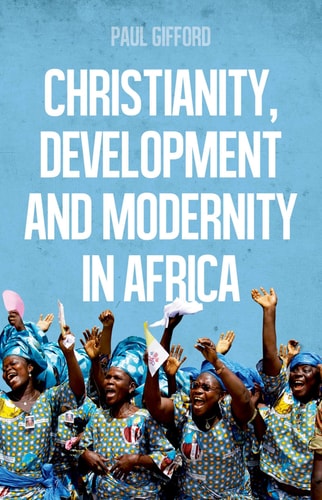
Christianity, Development and Modernity in Africa
0
0
As an Amazon Associate and affiliate partner, Menrva Books earns from qualifying purchases. Learn more
Author Description
There is an important if largely unremarked diversity within African Christianity; on the one hand, an enchanted Christianity that views the world as pervaded by spiritual forces, and on the other a disenchanted Christianity that discounts them.An enchanted Christian sees his glorious destiny threatened by witches, spirits, and ancestral curses. Churches catering for this worldview lay bare the workings of this spirit world, and this enchanted imagination, along with the prosperity gospel, and emphasis on the pastor's "anointing," are the principal characteristics of much African Pentecostalism.Gifford argues that the enchanted religious imagination militates against development by encouraging fear and distrust, diminishing human responsibility and agency, and downplaying functional rationality. The prosperity gospel of "covenant wealth from tithes and offerings" is the antithesis of Weber's Protestant ethic; and to magnify the person of the pastor is to perpetuate the curse of the "Big Man".Official Catholicism, totally disenchanted and long associated with schools and hospitals, is now involved in development, from microfinance to election monitoring, from conflict resolution to human rights. This "NGO-ization of Catholicism," made almost inevitable by funding from secular donors like the EU and UN, even if defended theologically, comes at the price of failing to address the "religious" needs of so many African Christians.
Menrva's Summary
THE THESIS
This book investigates how divergent theological frameworks within African Christianity—specifically the tension between enchanted and disenchanted worldviews—impact socio-economic development and modernity across the continent. Paul Gifford, a scholar specializing in African Christianity, utilizes extensive field research and theological analysis to argue that certain Pentecostal practices, such as the prosperity gospel and the elevation of charismatic leadership, actively undermine the rational structures necessary for sustainable development. He contrasts this with the institutionalized, secularized approach of official Catholicism, which, while effective in development sectors, often struggles to meet the spiritual expectations of its congregants.
THE SCOPE MAP
What You Will Find
- Comparative analysis of enchanted Pentecostalism versus disenchanted institutional Catholicism.
- Examination of the prosperity gospel and its economic implications in African contexts.
- Critique of the 'Big Man' leadership model within religious organizations.
- Analysis of the 'NGO-ization' of Catholic social services and its reliance on international secular funding.
Scope Limits
- The text does not provide an exhaustive survey of every Christian denomination in Africa.
- It does not offer a comprehensive history of colonial-era missionary work, focusing instead on contemporary manifestations.
THE AUTHORITY PERSPECTIVE
Experts in African studies and the sociology of religion frequently cite this work as a critical, if provocative, examination of the intersection between religious belief and economic progress. Readers often note the academic density of the prose and the author's uncompromising stance on the developmental consequences of specific theological practices.
Page Count:
198
Publication Date:
2016-03-01
Publisher:
Oxford University Press
ISBN-10:
0190495731
ISBN-13:
9780190495732
Religion
Pentecostalism
Africa
Christianity
Sociology of Religion
Community Tags
Similar Books