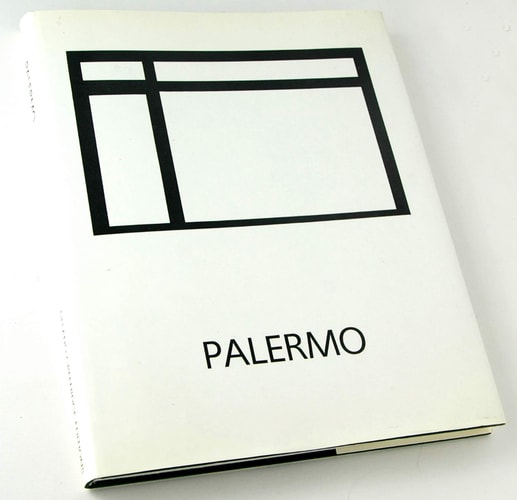
Blinky Palermo, 1943-1977
0
0
As an Amazon Associate and affiliate partner, Menrva Books earns from qualifying purchases. Learn more
Author Description
If one has been completely encircled by the ocean, one has no concept of the universe and one's relationship to the universe. As a landscape draftsman, I was inspired with entirely new thoughts by that large, simple line. Now Blinky Palermo was no landscape draftsman in the strict sense. But, to judge by the facts and anecdotes that have come down to us, he must have often felt completely encircled by the sea -- isolated and thrown back on his own resources. The large and simple line separating the here from the there, and thus becoming a border that must be crossed or overcome, strikes me (although I am not trying to psychologize this work) as an apt guideline; it can be a meaningful approach to Palermo's works, which are often so very remote, so far-removed, despite their self-evident presence. For here we have sensations in the true sense of the term: sensory events, which -- on the surface at least -- usually look like scientific specimens or models offering a problem that, so it seems, can be logically articulated. Yet during the analytical process, that problem increasingly defies any positivistic explanation, while more and more blatantly revealing its trinidaenz -- an anagram with which we effortlessly circumvent the problems with metaphysics and transcendence.
Menrva's Summary
THE THESIS
This book explores the life and work of the influential German artist Blinky Palermo. It delves into his artistic development, from his early inspirations to his mature style, examining the conceptual underpinnings of his minimalist and abstract pieces. The text investigates how Palermo's experiences, particularly his feelings of isolation, informed his unique visual language, which often appears both present and remote.
THE SCOPE MAP
- Biographical details of Blinky Palermo's life and career.
- Analysis of Palermo's artistic inspirations, including the concept of the 'large, simple line'.
- Examination of his minimalist and abstract artworks, often described as sensory events.
- Discussion of the conceptual and philosophical aspects of his work, including the term 'trinidaenz'.
THE AUTHORITY PERSPECTIVE
This book serves as a comprehensive overview of Blinky Palermo's artistic output and life. The text draws on anecdotes and factual accounts to illuminate his creative process and the conceptual framework behind his seemingly simple yet profound works. It positions Palermo as an artist whose work, despite its abstract nature, offers a unique sensory experience that challenges conventional interpretation. The analysis suggests that understanding his art requires appreciating its inherent paradoxes and the artist's own sense of isolation.
Page Count:
160
Publication Date:
1989-01-01
Publisher:
D. Greenidge Editions
ISBN-10:
0929445015
ISBN-13:
9780929445014
Biography
Art
Non-Fiction
Modern Art
Community Tags
Similar Books