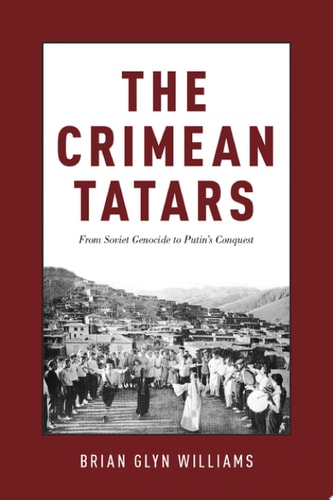
The Crimean Tatars
0
0
As an Amazon Associate and affiliate partner, Menrva Books earns from qualifying purchases. Learn more
Author Description
The Russian Annexation Of The Crimea In March 2014 Focused The World's Attention On The Peninsula In Ways Not Seen Since The Crimean War. Thousands Of Crimean Tatars Clashed With Pro-russian Militiamen In Simferopol, While Moscow Has In Turn Stoked Fears Of Jihadi Terrorism Among The Overwhelmingly Muslim Tatars As Retrospective Justification For Its Invasion. The Key Thread In This Book Is The Crimean Tatars' Changing Relationship With Their Vatan (homeland) And How This Interaction With Their Natal Territory Changed Under The Ottoman Sultans, Russian Tsars, Soviet Commissars, Post-soviet Ukrainian Authorities And Now Putin's Russia. Taking As Its Starting Point The 1783 Russian Conquest Of The Independent Tatar State Known As The Crimean Khanate, Williams Explains How The Peninsula's Native Population, With Ethnic Roots Among The Goths, Kipchak Turks, And Mongols, Was Scattered Across The Ottoman Empire. He Also Traces Their Later Emigration And The Radical Transformation Of This Conservative Tribal-religious Group Into A Modern, Politically Mobilized, Secular Nation Under Soviet Rule. Stalin's Genocidal Deportation Of The Crimean Tatars In 1944 To Uzbekistan And Their Almost Messianic Return To Their Cherished 'green Isle' In The 1990s Are Examined In Detail, While The Author's Archival Investigations Are Bolstered By His Field Research Among The Crimean Tatar Exiles In Uzbekistan And In Their Samozakhvat (self-seized) Squatter Camps And Settlements In The Crimea.
Menrva's Summary
THE THESIS
This book investigates the historical evolution of the Crimean Tatar identity and their complex, often fraught relationship with their ancestral homeland, the Vatan, across centuries of shifting imperial and state control. Brian Glyn Williams, a scholar specializing in the history of the Caucasus and Central Asia, utilizes a combination of archival research and ethnographic field studies to construct this narrative. He argues that the Crimean Tatars transformed from a conservative tribal-religious society into a modern, secularized nation, a process deeply influenced by external pressures ranging from Tsarist conquest to Soviet deportation and contemporary Russian annexation. The work provides a framework for understanding how indigenous populations maintain national cohesion despite systemic efforts at displacement and political marginalization.
THE SCOPE MAP
What You Will Find
- A historical survey of the Crimean Tatar experience from the 1783 collapse of the Crimean Khanate to the 2014 Russian annexation.
- Analysis of the 1944 Stalinist deportations and the subsequent return of the Tatar population to the peninsula in the 1990s.
- Ethnographic insights gathered from field research in Uzbekistan and Crimean samozakhvat settlements.
Scope Limits
- The text does not provide an exhaustive military history of the Crimean War or the broader geopolitical conflicts of the Black Sea region.
- It focuses primarily on the Tatar perspective and does not offer a comprehensive analysis of the internal political dynamics of the Russian Federation.
THE AUTHORITY PERSPECTIVE
Experts recognize this work as a significant contribution to the study of Crimean Tatar history, particularly for its integration of primary archival data with contemporary field research. Readers frequently note that the prose is accessible yet academically rigorous, making it a valuable resource for those seeking to understand the historical context behind modern geopolitical tensions in the region.
Page Count:
320
Publication Date:
2015-01-01
Publisher:
Oxford University Press
ISBN-10:
0190494719
ISBN-13:
9780190494711
History
Asian Studies
Crimea
Russia
Ethnic Studies
Community Tags
Similar Books