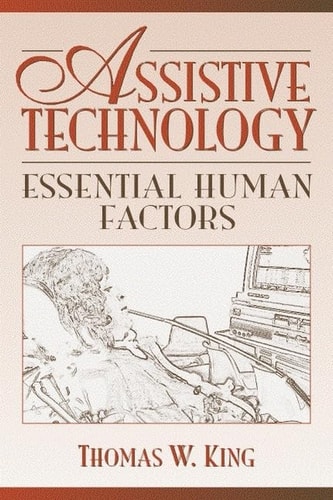
Assistive Technology: Essential Human Factors
0
0
As an Amazon Associate and affiliate partner, Menrva Books earns from qualifying purchases. Learn more
Author Description
The Information Age has transformed the way in which humans communicate and interact with each other in almost every aspect. This new relationship between humans and technology has been an added convenience for some, and a sheer blessing for others; for those with physical and communication impairments, modern-day technology has transformed daily living into a journey toward capability instead of disability. In its examination of assistive technology, this book serves as an essential resource for clinicians, product developers, families and individuals as they recommend, select, purchase, design, and use assistive technology. Combining real experience and academic research, King examines how humans can adapt to machinery and increase the acceptance, effectiveness, and efficiency of technology. This book investigates how psychological factors (such as fear, stress, rejection, etc.) can affect the efficiency of assistive technology. Product developers, speech pathologists, audiologists, occupational therapists, rehabilitation counselors, special educators, nurses, and businesses. A Longwood Professional Book
Menrva's Summary
THE THESIS
This book investigates the critical intersection of human psychology and technological design to determine how assistive devices can be optimized for individuals with physical and communication impairments. Thomas W. King, drawing on his professional background, synthesizes academic research with practical experience to address the barriers that prevent effective technology adoption. The text argues that the success of assistive tools depends not only on technical functionality but also on the user's psychological response to the machinery, such as stress or fear of rejection. By examining these human factors, the author provides a framework for clinicians and developers to improve the integration of technology into the daily lives of users.
THE SCOPE MAP
What You Will Find
- Analysis of psychological barriers including fear, stress, and social rejection in technology adoption.
- Methodologies for clinicians and developers to improve the selection and design of assistive devices.
- Case-based insights into the relationship between human capability and mechanical efficiency.
- Practical guidance for professionals in speech pathology, audiology, and occupational therapy.
THE AUTHORITY PERSPECTIVE
This work is regarded as a foundational text for professionals seeking to understand the human-centric aspects of rehabilitation technology. The framing suggests a dense, specialist resource intended for clinicians and product designers who require a structured approach to improving user acceptance and device efficacy.
Page Count:
305
Publication Date:
1998-09-24
Publisher:
Pearson
ISBN-10:
0205273262
ISBN-13:
9780205273263
Self Help
Rehabilitation
Occupational Therapy
Special Education
Human Factors
Technology Design
Community Tags
Similar Books