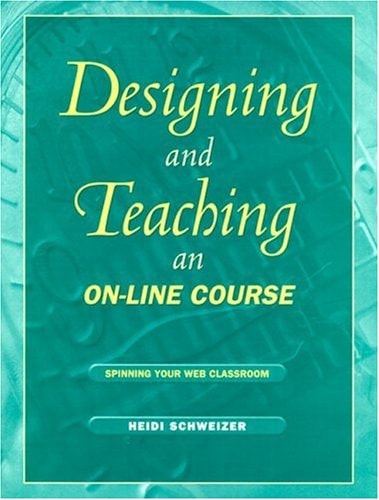
Designing and Teaching an On-Line Course: Spinning Your Web Classroom
0
0
As an Amazon Associate and affiliate partner, Menrva Books earns from qualifying purchases. Learn more
Author Description
Research-based with practical applications, this material has been created for both the novice and experienced instructor. Readers will receive helpful, step-by-step advice and detailed examples that will assist in the development of distance education and "virtual interaction." Written by an expert, this book offers a practical, applicable, hands-on approach that takes you--whether a novice or have some experience--through all the steps of high-quality course development, on-line teaching, and on-line assessment. It will help with the design and teaching of a course that is performance based, performance assessed, and collaborative (and not merely the "Remember all this and regurgitate it on demand" type of course that is all too prevalent). Throughout, you'll see actual examples from successfully-developed on-line courses, so you can more easily bridge the gap between theory and practice. The book begins with a helpful, concise summary of the basics, including selecting a courseware (software) package for delivering your course, fulfilling the four basic psychological needs that are so crucial to any learning environment, designing a performance-based curriculum, and creating performance-based assessments. As the author emphasizes, "You should organize your course around the learner, not the teacher." This handbook shows you exactly how. The handbook helps plan on-line activities and resources, explains what can and cannot be copied from various sources, offers advice on selecting computer hardware, creating on-line discussion groups, providing student support, making the course visually attractive, and assists in designing a course evaluation. Also included are photos of monitor screens, captured from various on-line courses, to illustrate points or clarify applications. For anyone interested in internet opportunities.
Menrva's Summary
THE THESIS
This book investigates the pedagogical and technical requirements for transitioning traditional instruction into effective, performance-based online learning environments. Heidi Schweizer, an expert in distance education, synthesizes research-based principles with actionable strategies to help instructors move beyond passive information delivery. The framework emphasizes a learner-centered approach, prioritizing collaborative interaction and authentic assessment over rote memorization.
THE SCOPE MAP
What You Will Find
- Methodologies for designing performance-based curricula and assessments.
- Technical guidance on selecting courseware, hardware, and managing digital resources.
- Practical strategies for fostering student engagement and psychological support in virtual spaces.
- Case studies and visual examples captured from successful online course implementations.
THE AUTHORITY PERSPECTIVE
The text provides a foundational, pragmatic approach to online pedagogy that remains relevant for instructors seeking to bridge the gap between educational theory and digital practice. Its focus on learner-centered design and structured assessment offers a clear, systematic guide for educators navigating the complexities of virtual classroom management.
Page Count:
121
Publication Date:
1999-05-05
Publisher:
Allyn & Bacon
ISBN-10:
0205303218
ISBN-13:
9780205303212
Instructional Design
Education
Teaching Methods
E-Learning
Community Tags
Similar Books