Food Power
0
0
As an Amazon Associate and affiliate partner, Menrva Books earns from qualifying purchases. Learn more
Author Description
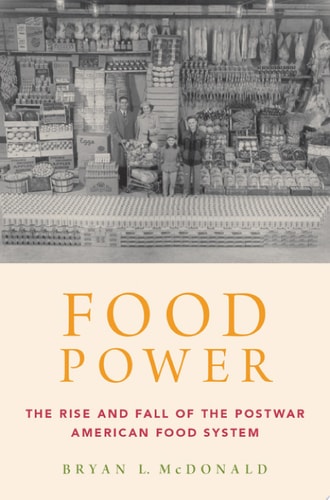
There Is A Widespread Assumption That The American Food System After World War Ii Was Transformed-toward An Increasingly Industrialized Production Of Crops, More Processed Foods, And Diets Higher In Fat, Sugar, And Calories-as Part Of A Unified System. In This Book, Bryan Mcdonald Brings Together The History Of Food, Agriculture, And Foreign Policy To Explore How Food Was Deployed In The First Decades Of The Cold War To Promote American National Security And National Interests, A Concept Referred To As Food Power. In The Postwar Years, Americans Struggled To Understand How An Unprecedented Abundance Of Food Could Be Used To Best Advance U.s. Goals And Values. Was Food A Weapon, A Commodity To Be Valued And Exchanged Through Markets, Or A Substance To Be Provided To Those In Need? Mcdonald Traces Different Visions Of Food Power And Shows How Food Formed An Essential Part Of America's Postwar Modernization Strategy And Its Vision Of What It Meant To Be A Stable, Secure, And Technologically Advanced Nation. Policymakers And Experts Helped Build A New Food System Based Around American Agricultural Surpluses That Stabilized Prices And Food Availability. This System Averted A Global-scale Food Crisis For Almost Three Decades. The End Of This Food System In The Early 1970s Ushered In A Much More Precarious Period In Global Food Relations. By The Late Twentieth Century, Food Politics Had Become A Battleground In Which The Interests Of Security And Foreign Policy Experts, Farmers, Businesses, And Politicians Contended With A Growing Social Movement Whose Adherents Worried About The Role Of Food In Contributing To Conflict And Inequality. Food Power Argues That The Ways Postwar American Policymakers And Experts Politically Linked People And Places Around The World Through Food Illuminates Both America's Role In The World During The Mid-twentieth Century And Sheds Light On Contemporary Food Problems.
Menrva's Summary
THE THESIS
This book investigates how the United States utilized agricultural surpluses and food policy as a strategic instrument of national security and foreign influence during the early Cold War era. Bryan L. McDonald, a historian specializing in environmental and food security, synthesizes archival research and policy analysis to argue that food was not merely a commodity but a central pillar of American modernization strategy. He examines the tension between viewing food as a weapon, a market commodity, or a humanitarian resource, illustrating how these competing visions shaped global stability for nearly thirty years.
THE SCOPE MAP
What You Will Find
- Analysis of the post-World War II American food system and its industrialization.
- Examination of the intersection between agricultural policy and Cold War foreign relations.
- Historical overview of the transition from the stable food system of the 1950s to the precarious global relations of the 1970s.
Scope Limits
- The text does not provide a comprehensive history of global agricultural production outside of the context of American foreign policy.
- It does not focus on the internal domestic nutritional health of the American public, prioritizing geopolitical strategy over public health outcomes.
THE AUTHORITY PERSPECTIVE
Experts recognize this work as a significant contribution to the history of food politics and international relations. Readers frequently note the academic density of the prose, which provides a rigorous framework for understanding the historical roots of contemporary food security challenges.
Page Count:
304
Publication Date:
2016-01-01
Publisher:
Oxford University Press
ISBN-10:
0190600691
ISBN-13:
9780190600693
History
Agriculture
International relations
Food Studies
Cold War
Community Tags
Similar Books