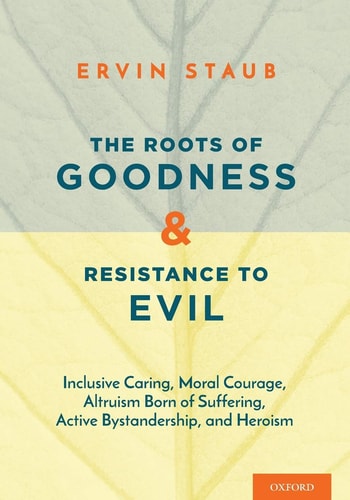
The Roots of Goodness and Resistance to Evil: Inclusive Caring, Moral Courage, Altruism Born of Suffering, Active Bystandership, and Heroism
0
0
As an Amazon Associate and affiliate partner, Menrva Books earns from qualifying purchases. Learn more
Author Description
In The Roots of Goodness and Resistance to Evil, Ervin Staub draws on his extensive experiences in scholarship and intervention to illuminate the socializing experiences, education, and trainings that lead children and adults to become helpers/active bystanders and rescuers, acting to prevent violence and create peaceful and harmonious societies. The book collects Staub's most important and influential articles and essays in the field, compiling a variety of examples of helping behaviors as well as discussions of why we should help and not harm others. He addresses a wide range of such behaviors, from helping people in everyday physical or psychological distress, to active bystandership in response to harmful actions by youth toward their peers (bullying), to endangering one's life to save someone in immediate danger, or rescuing intended victims of genocide.Staub engages with ways to promote active bystandership in the service of preventing violence, helping people to heal from violence, and building caring societies. He explores the range of experiences that lead to active bystandership, including socialization by parents, teachers (and peers) in childhood, education, experiential learning, and public education through media. He examines what personal characteristics or dispositions result from such experiences, which in turn lead to caring and helping. Staub also considers how circumstances influence people--both individuals and whole groups--and how they join with personal dispositions to determine whether people remain passive in the face of others' need or instead help others and behave in morally courageous or even heroic ways. He considers how moral and caring values can be subverted by circumstances, and outlines ways to resist that possiblity. He also considers how past victimization and the resulting psychological woundedness, which can lead to "defensive violence" or hostility toward people and the world, may be transformed by other experiences, leading
Menrva's Summary
THE THESIS
This work investigates the psychological, social, and educational foundations that cultivate altruism, moral courage, and active bystandership in individuals. Ervin Staub, a prominent scholar in the psychology of violence and peace, synthesizes decades of research and intervention experience to explain how personal dispositions and environmental circumstances interact. He argues that by understanding the mechanisms of socialization and the impact of past trauma, society can foster behaviors that prevent violence and promote collective well-being.
THE SCOPE MAP
What You Will Find
- Analysis of socialization processes in childhood and adolescence.
- Frameworks for understanding active bystandership versus passive observation.
- Examination of the psychological transformation of trauma into altruism.
- Strategies for promoting moral courage and preventing bullying or genocide.
Scope Limits
- The text focuses primarily on psychological and social behavioral models rather than biological or neurological determinants of morality.
- It does not provide a comprehensive historical account of all global humanitarian movements.
THE AUTHORITY PERSPECTIVE
Experts recognize this collection as a foundational synthesis of Staub's life work regarding the psychology of helping and harm. Readers frequently note that the prose is accessible to both academic researchers and practitioners interested in social intervention.
Page Count:
410
Publication Date:
2016-04-01
Publisher:
Oxford University Press
ISBN-10:
019060798X
ISBN-13:
9780190607982
Psychology
Ethics
Courage
Altruism
Good & Evil
Sociology
Community Tags
Similar Books






Reader Comments
Share Your Thoughts
No comments yet. Be the first to share your thoughts!