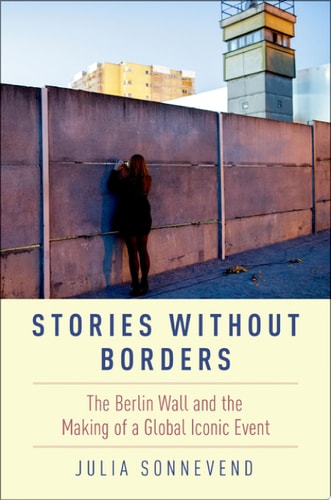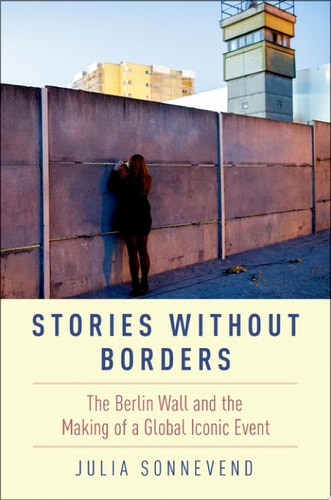
Stories Without Borders: The Berlin Wall and the Making of a Global Iconic Event
0
0
As an Amazon Associate and affiliate partner, Menrva Books earns from qualifying purchases. Learn more
Author Description
How do stories of particular events turn into global myths, while others fade away? What becomes known and seen as a global iconic event? In Stories without Borders, Julia Sonnevend considers the ways in which we recount and remember news stories of historic significance. Focusing on journalists covering the fall of the Berlin Wall and on subsequent retellings of the event in a variety of ways - from Legoland reenactments to slabs of the Berlin Wall installed in global cities - Sonnevend discusses how certain events become built up so that people in many parts of the world remember them for long periods of time. She argues that five dimensions determine the viability and longevity of international news events. First, a foundational narrative must be established with certain preconditions. Next, the established narrative becomes universalized and a mythical message developed. This message is then condensed and encapsulated in a simple phrase, a short narrative, and a recognizable visual scene. Counter-narratives emerge that reinterpret events and in turn facilitate their diffusion across multiple media platforms and changing social and political contexts. Sonnevend examines these five elements through the developments of November 9, 1989 - what came to be known as the fall of the Berlin Wall. Stories Without Borders concludes with a discussion of how global iconic events have an enduring effect on individuals and societies, pointing out that after common currencies, military alliances, and international courts have failed, stories may be all that we have to bring hope and unity.
Menrva's Summary
THE THESIS
This book investigates the mechanisms by which specific historical news events are transformed into enduring global myths. Julia Sonnevend, a scholar in media and communications, utilizes the fall of the Berlin Wall as a primary case study to identify the structural requirements for an event to achieve iconic status. She proposes a five-dimensional framework that explains how narratives are constructed, universalized, and maintained across diverse cultural and political landscapes over time.
THE SCOPE MAP
What You Will Find
- A five-dimensional model for analyzing the longevity of international news events
- Analysis of the fall of the Berlin Wall as a foundational case study
- Examination of diverse media representations including reenactments and physical monuments
- Discussion on the role of counter-narratives in event diffusion
Scope Limits
- The study focuses primarily on the media construction of the Berlin Wall event rather than a comprehensive political history of the Cold War
- The analysis is limited to the specific criteria of 'iconic' events rather than general news reporting
THE AUTHORITY PERSPECTIVE
Experts in media studies and sociology recognize this work as a significant contribution to the understanding of collective memory and narrative construction. Readers frequently note the clarity of the author's theoretical framework and its applicability to modern digital media environments.
Page Count:
232
Publication Date:
2016-10-07
Publisher:
Oxford University Press
ISBN-10:
019060431X
ISBN-13:
9780190604318
History
Sociology
Communication
Media Studies
Political Aspects
Memory
Nationalism
Journalism
Community Tags
Similar Books