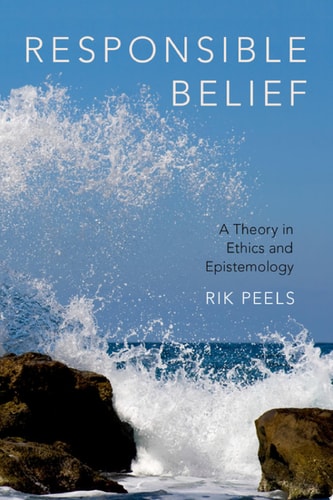
Responsible Belief: A Theory in Ethics and Epistemology
0
0
As an Amazon Associate and affiliate partner, Menrva Books earns from qualifying purchases. Learn more
Author Description
What we believe and what we do not believe has a great impact on what we do and fail to do. Hence, if we want to act responsibly, we should believe responsibly. However, do we have the kind of control over our beliefs that such responsibility for our beliefs seems to require? Do we have certain obligations to control or influence our beliefs on particular occasions? And do we sometimes believe responsibly despite violating such obligations, namely because we are excused by, say, indoctrination or ignorance?By answering each of these questions, Rik Peels provides a theory of what it is to believe responsibly. He argues that we lack control over our beliefs, but that we can nonetheless influence our beliefs by performing actions that make a difference to what we believe. We have a wide variety of moral, prudential, and epistemic obligations to perform such belief-influencing actions. We can be held responsible for our beliefs in virtue of such influence on our beliefs. Sometimes, we believe responsibly despite having violated such obligations, namely if we are excused, by force, ignorance, or luck. A careful consideration of these excuses teaches us, respectively, that responsible belief entails that we could have failed to have that belief, that responsible belief is in a specific sense radically subjective, and that responsible belief is compatible with its being a matter of luck that we hold that belief.
Menrva's Summary
THE THESIS
This book investigates the conditions under which individuals can be held morally responsible for their beliefs, despite the apparent lack of direct voluntary control over them. Rik Peels, a philosopher specializing in epistemology and ethics, constructs a framework that bridges the gap between belief formation and moral accountability. By analyzing the intersection of epistemic obligations and human agency, the author argues that while we cannot choose our beliefs directly, we are responsible for the actions we take that influence our belief-forming processes.
THE SCOPE MAP
What You Will Find
- A theoretical framework for belief-influencing actions
- An analysis of moral, prudential, and epistemic obligations
- A detailed taxonomy of excuses including force, ignorance, and luck
Scope Limits
- The text does not provide a comprehensive history of doxastic voluntarism
- It does not address theological implications of belief responsibility
THE AUTHORITY PERSPECTIVE
Scholars in the field recognize this work as a rigorous contribution to contemporary debates regarding doxastic responsibility. Readers frequently note the academic density of the prose, which is tailored for advanced students and professional philosophers interested in the intersection of ethics and epistemology.
Page Count:
288
Publication Date:
2016-12-01
Publisher:
Oxford University Press
ISBN-10:
0190608110
ISBN-13:
9780190608118
Philosophy
Non-Fiction
Epistemology
Ethics
Knowledge Theory
Moral Philosophy
Community Tags
Similar Books