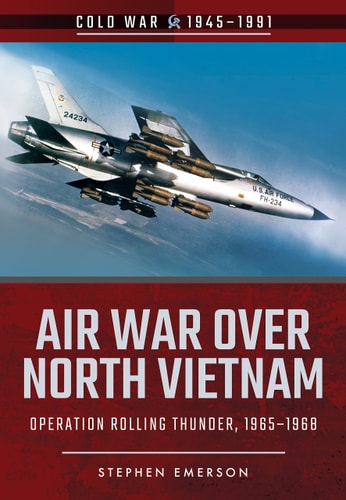
Air War Over North Vietnam: Operation Rolling Thunder, 1965-1968
0
0
As an Amazon Associate and affiliate partner, Menrva Books earns from qualifying purchases. Learn more
Author Description
In early 1965 the United States unleashed the largest sustained aerial bombing campaign since World War II, against North Vietnam. Through an ever escalating onslaught of destruction, Operation Rolling Thunder intended to signal America's unwavering commitment to its South Vietnamese ally in the face of continued North Vietnamese aggression, break Hanoi's political will to prosecute the war, and bring about a negotiated settlement to the conflict. It was not to be. Against the backdrop of the Cold War and fears of widening the conflict into a global confrontation, Washington policy makers micromanaged and mismanaged the air campaign and increasingly muddled strategic objectives and operational methods that ultimately sowed the seeds of failure, despite the heroic sacrifices by U.S. Air Force and Navy pilots and crews Despite flying some 306,000 combat sorties and dropping 864,000 tons of ordnance on North Vietnam - 42 per cent more than that used in the Pacific theater during World War II - Operation Rolling Thunder failed to drive Hanoi decisively to the negotiating table and end the war. That would take another four years and another air campaign. But by building on the hard earned political and military lessons of the past, the Nixon Administration and American military commanders would get another chance to prove themselves when they implemented operations Linebacker I and II in May and December 1972. And this time the results would be vastly different.
Menrva's Summary
THE THESIS
The largest sustained aerial bombing campaign since World War II was unleashed against North Vietnam in early 1965. Operation Rolling Thunder, intended to signal unwavering commitment to South Vietnam and break Hanoi's political will, ultimately failed due to micromanagement and muddled objectives by Washington policymakers. Despite heroic sacrifices by U.S. pilots and crews, flying hundreds of thousands of combat sorties and dropping vast amounts of ordnance, the campaign did not drive North Vietnam to the negotiating table. The lessons learned from Rolling Thunder would, however, inform later, more successful operations.
THE SCOPE MAP
- Detailed account of Operation Rolling Thunder, 1965-1968
- Analysis of the strategic and operational failures of the air campaign
- Examination of the political context of the Cold War and fears of escalation
- Exploration of the micromanagement and muddled objectives by policymakers
- Highlighting the heroic sacrifices of U.S. Air Force and Navy pilots and crews
- Comparison of ordnance dropped to World War II Pacific theater
- Discussion of the lessons learned that informed later operations like Linebacker I and II
THE AUTHORITY PERSPECTIVE
The book details the strategic and operational complexities of Operation Rolling Thunder, analyzing how political interference and shifting objectives undermined its effectiveness. It highlights the immense efforts and sacrifices of the aircrews involved, contrasting the campaign's scale with its ultimate failure to achieve its stated goals. The narrative also sets the stage for subsequent operations, suggesting that the hard-won lessons of Rolling Thunder were crucial for future military actions. The work appears to be a thorough historical account of a significant, yet flawed, military endeavor.
Page Count:
128
Publication Date:
2018-01-01
Publisher:
Pen and Sword Military
ISBN-10:
1526708221
ISBN-13:
9781526708229
History
Non-Fiction
Aviation History
Vietnam War
Military History
Community Tags
Similar Books