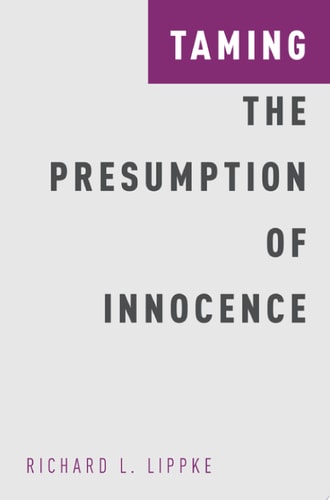
Taming the Presumption of Innocence: Studies in Penal Theory and Philosophy
0
0
As an Amazon Associate and affiliate partner, Menrva Books earns from qualifying purchases. Learn more
Author Description
The notion that an individual accused of a crime is presumed innocent until proven guilty is one of the cornerstones of the American criminal justice system. However, the presumption of innocence creates a number of practical and theoretical issues, particularly regarding pre-trial and post-trial processes. In Taming the Presumption of Innocence, Richard L. Lippke argues that the presumption of innocence should be contained to the criminal trial. Beyond the realm of the trial, legal professionals, investigators, and the general public should carry out their respective roles in the criminal justice process without making any presumptions about guilt or innocence whatsoever. Rather than eschewing the significance of the presumption of innocence, the book defends its role within its proper context, the criminal trial. According to Lippke, other aspects of the criminal justice system such as investigation, lawmaking, and treatment of ex-offenders should be conducted in such a way that reflects the fallibility and unpredictability of the system without involving the issue of presumed guilt or innocence. Lippke dispels the idea that the presumption of innocence can be used to remedy some of the current issues in the practice of criminal justice, and instead proposes engaging in deeper, more substantive reforms of the American criminal justice system. The first monograph dedicated exclusively to the presumption of innocence, Taming the Presumption of Innocence will be an ideal text for students and scholars of criminology, criminal justice, and legal theory.
Menrva's Summary
THE THESIS
This book investigates whether the presumption of innocence, while foundational to the criminal trial, should be restricted in its application to other stages of the criminal justice process. Richard L. Lippke, a scholar in legal theory and criminal justice, utilizes a philosophical framework to analyze the practical implications of the presumption of innocence. He argues that extending this presumption beyond the courtroom creates systemic confusion and suggests that investigators and policymakers should instead focus on the fallibility of the system and substantive reform.
THE SCOPE MAP
What You Will Find
- Philosophical critique of the presumption of innocence in modern legal systems
- Analysis of pre-trial and post-trial procedural issues
- Proposals for systemic reform in lawmaking and investigation
Scope Limits
- Does not provide a comprehensive history of common law
- Does not offer a manual for trial advocacy or defense strategy
THE AUTHORITY PERSPECTIVE
Experts recognize this work as the first monograph dedicated exclusively to the theoretical boundaries of the presumption of innocence. Readers frequently note the academic density of the prose, making it a specialized resource for scholars and students of legal philosophy.
Page Count:
288
Publication Date:
2016-01-01
Publisher:
Oxford University Press
ISBN-10:
019060106X
ISBN-13:
9780190601065
Philosophy
Penal Theory
Legal Theory
Law
Criminology
Professional Career & Trade
Community Tags
Similar Books