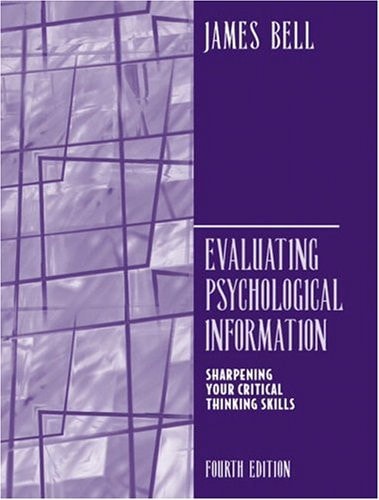
Evaluating Psychological Information: Sharpening Your Critical Thinking Skills
0
0
As an Amazon Associate and affiliate partner, Menrva Books earns from qualifying purchases. Learn more
Author Description
This text provides readers with the intellectual tools necessary to evaluate psychological information and to separate research from opinion and reliable evidence from propaganda. Proposing a four-step procedure, the text focuses on helping students evaluate psychological research and evidence from various (and sometimes incomplete or misleading) secondary sources. Step 1 involves identifying the source; Step 2 teaches how to understand the source by analyzing the central idea (Ch. 3); Step 3 teaches how to identify the source; and Step 4 instructs how to evaluate evidence from psychological research (Ch. 4). Each chapter opens with critical thinking questions and includes examples, practice, and feedback—all essential parts of the learning process.
Menrva's Summary
THE THESIS
This text investigates the core question of how students and researchers can effectively distinguish between rigorous psychological research and unsubstantiated opinion or propaganda. Author James E. Bell provides a structured, four-step pedagogical framework designed to sharpen analytical faculties when encountering secondary psychological information. By emphasizing the identification, analysis, and evaluation of sources, the text equips readers with a systematic methodology for navigating complex and often misleading information environments.
THE SCOPE MAP
What You Will Find
- A structured four-step procedure for evaluating psychological claims and research evidence.
- Analytical techniques for identifying source credibility and detecting propaganda.
- Critical thinking exercises and practice modules integrated into every chapter.
- Methodologies for dissecting central ideas and assessing the validity of secondary source reporting.
THE AUTHORITY PERSPECTIVE
The subject matter points to a dense, academic-focused text intended for students and practitioners seeking to refine their information literacy skills. The systematic, step-by-step framing suggests a practical, classroom-oriented approach to the complexities of psychological research evaluation.
Page Count:
96
Publication Date:
2004-07-29
Publisher:
Pearson
ISBN-10:
0205435114
ISBN-13:
9780205435111
Psychology
Critical thinking
Research Methods
Education
Community Tags
Similar Books