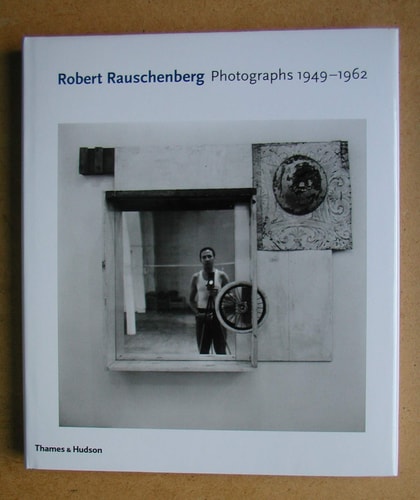
Robert Rauschenberg Photographs 1949-1962
0
0
As an Amazon Associate and affiliate partner, Menrva Books earns from qualifying purchases. Learn more
Author Description
This volume gathers and surveys Rauschenberg's numerous uses of photography for the first time. It includes portraits of friends such as Cy Twombly, Jasper Johns, Willem de Kooning, Merce Cunningham and John Cage, studio shots, photographs used in the Combines series, silkscreens, photographs of lost works and works in progress - allowing us to reimagine almost the entirety of the artist's work in light of his uses of photography, while also supplying previously unseen glimpses into his social nexus of the 1950s and 60s. Robert Rauschenberg's engagement with photography began in the late 1940s during his time at Black Mountain College in North Carolina; for a while he was even unsure whether to pursue painting or photography as a career. Instead he chose both. He found ways to fold photography into his Combines, and maintained a practice of photographing friends and family, documenting the evolution of works and occasionally dramatizing them by inserting himself into the picture frame. As the distinguished curator Walter Hopps wrote, 'The use of photography has long been an essential device for Rauschenberg's melding of imagery... [and] a vital means for Rauschenberg's aesthetic investigations of how humans perceive, select and combine visual information. Without photography, much of Rauschenberg's oeuvre would scarcely exist.' The artist himself affirmed, 'I've never stopped being a photographer.'
Menrva's Summary
THE THESIS
This volume investigates the integral and multifaceted role of photography in the artistic development of Robert Rauschenberg from 1949 to 1962. Robert Rauschenberg, a seminal figure in post-war American art, initially grappled with choosing between painting and photography as his primary medium. This collection showcases his extensive use of photography, not merely as documentation but as a foundational element integrated into his iconic
THE SCOPE MAP
- Portraits of notable figures such as Cy Twombly, Jasper Johns, Willem de Kooning, Merce Cunningham, and John Cage.
- Studio shots capturing the artist's creative environment.
- Photographs that were incorporated into Rauschenberg's groundbreaking Combines series.
- Images used in his silkscreen works.
- Photographs of lost artworks and works in progress, offering insight into his creative process.
- Previously unseen glimpses into Rauschenberg's social circle and artistic milieu of the 1950s and 60s.
- Rauschenberg's own self-portraits within his work.
THE AUTHORITY PERSPECTIVE
This collection is recognized for its comprehensive survey of Rauschenberg's early photographic output, providing crucial context for his broader artistic career. The inclusion of portraits of key figures from the art and dance worlds, alongside documentation of his evolving works, offers significant insight into his creative process and social connections. Walter Hopps's commentary highlights photography's essential role in Rauschenberg's aesthetic investigations and the melding of imagery, underscoring its vital function in his oeuvre. The volume effectively reimagines Rauschenberg's entire body of work through the lens of his photographic practices.
Page Count:
232
Publication Date:
2011-01-01
Publisher:
Thames & Hudson
ISBN-10:
050054400X
ISBN-13:
9780500544006
Non-Fiction
Art
Biography
Photography
Art History
Community Tags
Similar Books