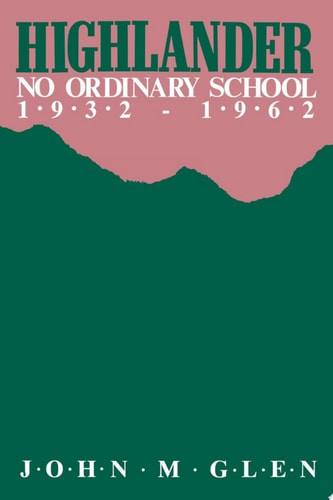
Highlander: No Ordinary School, 1932–1962
0
0
As an Amazon Associate and affiliate partner, Menrva Books earns from qualifying purchases. Learn more
Author Description
and racial justice during a critical era in southern and Appalachian history. This volume is the first comprehensive examination of that extraordinary—and often controversial—institution. Founded in 1932 by Myles Horton and Don West near Monteagle, Tennessee, this adult education center was both a vital resource for southern radicals and a catalyst for several major movements for social change. During its thirty-year history it served as a community folk school, as a training center for southern labor and Farmers' Union members, and as a meeting place for black and white civil rights activists. As a result of the civil rights involvement, the state of Tennessee revoked the charter of the original institution in 1962. At the heart of Horton's philosophy and the Highlander program was a belief in the power of education to effect profound changes in society. By working with the knowledge the poor of Appalachia and the South had gained from their experiences, Horton and his staff expected to enable them to take control of their own lives and to solve their own problems. John M. Glen's authoritative study is more than the story of a singular school in Tennessee. It is a biography of Myles Horton, co-founder and long-time educational director of the school, whose social theories shaped its character. It is an analysis of the application of a particular idea of adult education to the problems of the South and of Appalachia. And it affords valuable insights into the history of the southern labor and the civil rights movements and of the individuals and institutions involved in them over the past five decades.
Menrva's Summary
THE THESIS
The Highlander Folk School served as a controversial crucible for social change in the American South during a pivotal thirty-year period. Founded in 1932 by Myles Horton and Don West, this adult education center aimed to empower marginalized communities through education, becoming a vital resource for radicals and a catalyst for major social movements. It functioned as a community folk school, a training ground for labor and Farmers' Union members, and a crucial meeting place for Black and white civil rights activists, ultimately leading to the revocation of its charter in 1962 due to its civil rights involvement.
THE SCOPE MAP
- The history of the Highlander Folk School from 1932 to 1962.
- An examination of the educational philosophy of Myles Horton and its application to the problems of the South and Appalachia.
- The role of Highlander as a community folk school and training center for labor and Farmers' Union members.
- Its significance as a meeting place for Black and white civil rights activists.
- Analysis of the social and political context of the era, including racial justice and southern history.
- Insights into the southern labor and civil rights movements and the individuals involved.
THE AUTHORITY PERSPECTIVE
John M. Glen's study is recognized as the first comprehensive examination of the Highlander Folk School, offering an authoritative account of its thirty-year history and its controversial role in social change. The book is noted for its deep dive into the philosophy of co-founder Myles Horton and its application to the challenges faced by marginalized communities in the South and Appalachia. It provides valuable insights into the intertwined histories of the southern labor and civil rights movements, highlighting Highlander's function as a catalyst and meeting ground for activists. The work is considered essential for understanding the broader landscape of social activism and adult education in the mid-20th century American South.
Page Count:
328
Publication Date:
2014-07-15
Publisher:
The University Press of Kentucky
ISBN-10:
0813163250
ISBN-13:
9780813163253
History
Non-Fiction
Labor history
Education
Civil Rights
Community Tags
Similar Books