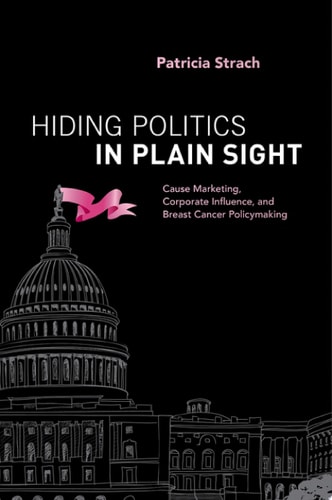
Hiding Politics in Plain Sight: Cause Marketing, Corporate Influence, and Breast Cancer Policymaking
0
0
As an Amazon Associate and affiliate partner, Menrva Books earns from qualifying purchases. Learn more
Author Description
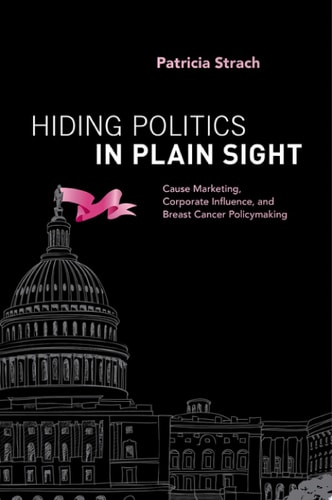
As late as the 1980s, breast cancer was a stigmatized disease, so much so that local reporters avoided using the word "breast" in their stories and early breast cancer organizations steered clear of it in their names. But activists with business backgrounds began to partner with corporations for sponsored runs and cause-marketing products, from which a portion of the proceeds would benefit breast cancer research. Branding breast cancer as "pink"--hopeful, positive, uncontroversial--on the products Americans see every day, these activists and corporations generated a pervasive understanding of breast cancer that is widely shared by the public and embraced by policymakers. Clearly, they have been successful: today, more Americans know that the pink ribbon is the symbol of breast cancer than know the name of the vice president. Hiding Politics in Plain Sight examines the costs of employing market mechanisms--especially cause marketing--as a strategy for change. Patricia Strach suggests that market mechanisms do more than raise awareness of issues or money to support charities: they also affect politics. She shows that market mechanisms, like corporate-sponsored walks or cause-marketing, shift issue definition away from the contentious processes in the political sphere to the market, where advertising campaigns portray complex issues along a single dimension with a simple solution: breast cancer research will find a cure and Americans can participate easily by purchasing specially-marked products. This market competition privileges even more specialized actors with connections to business. As well, cooperative market activism fundamentally alters the public sphere by importing processes, values, and biases of market-based action into politics. Market activism does not just bring social concerns into market transactions, it also brings market biases into public policymaking, which is inherently undemocratic. As a result, industry and key activists work cooperatively rath
Menrva's Summary
THE THESIS
This book investigates how the integration of cause marketing into social activism influences public policy and democratic processes. Patricia Strach, a scholar of political science and public policy, analyzes the shift from traditional political advocacy to market-based strategies. By examining the rise of the pink ribbon movement, she argues that corporate-sponsored activism simplifies complex health issues into consumer transactions, thereby importing market biases into the public sphere and marginalizing alternative political voices.
THE SCOPE MAP
What You Will Find
- Analysis of the historical transition of breast cancer advocacy from stigmatized social movement to corporate-partnered cause marketing.
- A theoretical framework for understanding how market mechanisms alter issue definition and public discourse.
- Examination of the intersection between corporate interests, non-profit organizations, and government policymaking.
Scope Limits
- The study focuses primarily on the American context of breast cancer advocacy and does not provide a comprehensive global analysis of cause marketing.
- The text does not offer a guide for non-profits on how to successfully implement cause marketing campaigns.
THE AUTHORITY PERSPECTIVE
Scholars in political science and sociology frequently cite this work for its critical examination of how market-based activism impacts democratic engagement. Experts highlight the text as a rigorous analysis of the hidden political costs associated with corporate-sponsored social movements.
Page Count:
253
Publication Date:
2016-01-01
Publisher:
Oxford University Press
ISBN-10:
0190606878
ISBN-13:
9780190606879
Health Policy
Breast Cancer
Marketing
Public Policy
Sociology
Corporate Responsibility
Community Tags
Similar Books