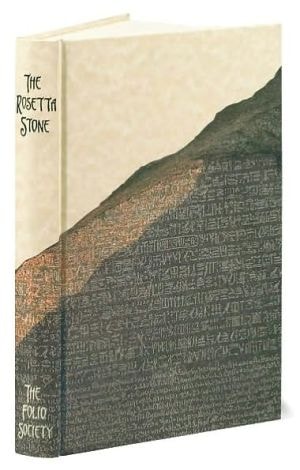
The Rosetta Stone (folio Society Edition)
0
0
As an Amazon Associate and affiliate partner, Menrva Books earns from qualifying purchases. Learn more
Author Description
Egyptian hieroglyphics are almost the oldest - and certainly the most beautiful - form of writing known to man. But despite centuries of speculation it was not until July 1799, when a French officer stumbled upon a granite block near the Delta town of Rosetta, that the dramatic process of decipherment could truly begin. Bearing the same text in three different scripts - Greek, hieroglyphic and a later form of Egyptian writing known as demotic - this strange stone seemed to offer the first real key to understanding the language of the pharaohs and illuminating a dark corner of the ancient world. The British defeated the French in battle, confiscated the Rosetta Stone and displayed it among the treasures of the British Museum, where it became the focus of endless disputes about stolen property and precipitated a frantic race to reveal its secrets. In the lead were an Englishman, Thomas Young, and his bitter French rival, Jean-François Champollion. It was the latter (working entirely from copies) who eventually achieved the decisive breakthrough when he managed to pick out phonetic versions of Greek names like Alexander, Berenice, Cleopatra and Ptolemy. At the heart of the book is a gripping account of a supreme linguistic and archaeological achievement. Solé and Valbelle brilliantly capture the sheer excitement of the quest, offering many sharp insights into the obsessive, eccentric men whose wild guesses, vicious personal attacks and superb detective work eventually led to the decoding. This edition also includes W. V. Davies's incisive overview of what we now know about the grammar, development and meaning of Egyptian hieroglyphics. 288 Pages; Frontispiece and 12 pages of color plates;Size 9½" x 6¾".
Page Count:
0
Publication Date:
1900-01-01
Publisher:
Folio Society
ISBN-10:
1400661056
ISBN-13:
9781400661053