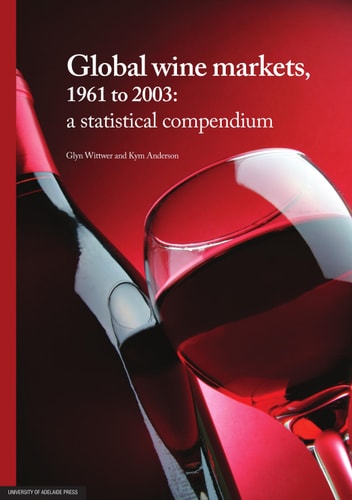
Global Wine Markets, 1961 to 2009: A Statistical Compendium
0
0
As an Amazon Associate and affiliate partner, Menrva Books earns from qualifying purchases. Learn more
Author Description
Until very recently, most grape-based wine was consumed close to where it was produced, and mostly that was in Europe. Barely one-tenth of the worlds wine production was exported prior to the 1970s, even counting intra-European trade. The latest wave of globalization has changed that forever. Now more than one - third of all wine consumed globally is produced in another country, and Europes dominance of global wine trade has been greatly diminished by the surge of exports from New World producers. New consumers also have come onto the scene as incomes have grown, eating habits have changed and tastes have broadened. Asia in particular is emerging as a new and rapidly growing wine market-and in China that is stimulating the development of local, modern production capability that, in volume terms, already rivals that of Argentina, Australia and South Africa. This latest edition of global wine statistics therefore not only updates data to 2009 and revises past data, but also expands on earlier editions in a number of ways. For example, we now separately identify an extra eight Asian countries or customs areas (Hong Kong, India, Korea, Malaysia, Philippines, Singapore, Taiwan and Thailand) in addition to China and Japan. We also include more than 50 new tables to cover such items as excise and import taxes, per capita expenditure on wine, the share of domestic sales in off - trade, the shares of the largest firms in national markets and globally, and the most powerful wine brands globally. Given the growing interest in the health aspects of alcohol consumption, we now express it per adult as well as per capita. Perhaps the most significant addition to this latest version is a new section that provides estimates of the volume, value and hence unit value of wine production, consumption, exports and imports for four catagories - non-premium, commercial-premium, super-premium and sparkling wines.
Menrva's Summary
THE THESIS
This compendium meticulously details the global wine market's transformation from localized consumption to a dynamic international trade from 1961 to 2009. The work addresses the profound shifts driven by globalization, which have seen New World producers rise to prominence and Europe's historical dominance wane. It tracks the emergence of new consumer markets, particularly in Asia, and the development of local production capabilities in countries like China. The compendium utilizes extensive statistical data to illustrate these trends, providing a comprehensive overview of the industry's evolution.
THE SCOPE MAP
- Statistical data on global wine production, consumption, and exports from 1961 to 2009.
- Analysis of the shift from localized wine consumption to international trade.
- Identification of emerging wine markets, with a focus on Asian countries.
- Data on the growth of New World wine producers and their impact on global trade.
- Inclusion of new tables covering excise and import taxes, per capita expenditure, and market shares of major firms.
- Breakdown of wine categories: non-premium, commercial-premium, super-premium, and sparkling wines.
- Estimates of volume, value, and unit value for wine production, consumption, exports, and imports by category.
- Consideration of per capita and per adult consumption figures, reflecting growing interest in health aspects.
THE AUTHORITY PERSPECTIVE
This statistical compendium offers a detailed, data-driven account of the global wine market's significant changes over nearly five decades. The work's strength lies in its comprehensive data collection and analysis, particularly its updated figures through 2009 and expanded coverage of Asian markets and specific wine categories. The inclusion of tax data and market share information provides valuable insights for industry professionals and researchers. Its methodical approach makes it a key resource for understanding the economic and trade dynamics that have reshaped wine production and consumption worldwide.
Page Count:
467
Publication Date:
2009-01-01
Publisher:
University of Adelaide Press
ISBN-10:
0980623847
ISBN-13:
9780980623840
Non-Fiction
History
Economics
Business
Trade
Community Tags
Similar Books