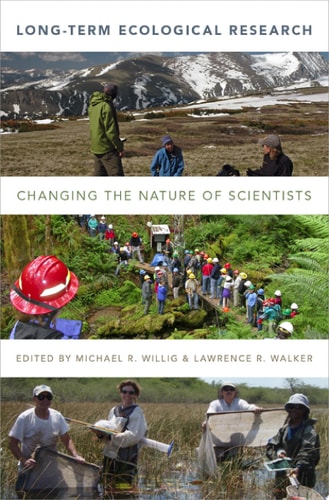
Long-Term Ecological Research: Changing the Nature of Scientists
0
0
As an Amazon Associate and affiliate partner, Menrva Books earns from qualifying purchases. Learn more
Author Description
The Long-Term Ecological Research (LTER) Program is, in a sense, an experiment to transform the nature of science, and represents one of the most effective mechanisms for catalyzing comprehensive site-based research that is collaborative, multidisciplinary, and long-term in nature. The scientific contributions of the Program are prodigious, but the broader impacts of participation have not been examined in a formal way. This book captures the consequences of participation in the Program on the perspectives, attitudes, and practices of environmental scientists.The edited volume comprises three sections. The first section includes two chapters that provide an overview of the history, goals, mission, and inner workings of the LTER network of sites. The second section comprises three dozen retrospective essays by scientists, data managers or educators who represent a broad spectrum of LTER sites from deserts to tropical forests and from arctic to marine ecosystems. Each essay addresses the same series of probing questions to uncover the extent to which participation has affected the ways that scientists conduct research, educate students, or provide outreach to the public. The final section encompasses 5 chapters, whose authors are biophysical scientists, historians, behavioral scientists, or social scientists. This section analyzes, integrates, or synthesizes the content of the previous chapters from multiple perspectives and uncovers emergent themes and future directions.
Menrva's Summary
THE THESIS
This volume investigates how long-term participation in the Long-Term Ecological Research (LTER) Program fundamentally alters the professional perspectives, research methodologies, and collaborative practices of environmental scientists. Editors Lawrence R. Walker and Michael R. Willig compile a diverse collection of retrospective essays and analytical chapters to evaluate the program's impact on the scientific community. By examining the experiences of researchers across various ecosystems, the book assesses whether site-based, multidisciplinary collaboration creates a distinct shift in how ecological science is conducted and communicated.
THE SCOPE MAP
What You Will Find
- A comprehensive history and operational overview of the LTER network of sites.
- Thirty-six retrospective essays from scientists, educators, and data managers across diverse biomes including deserts, forests, and marine environments.
- Multidisciplinary synthesis chapters written by historians, behavioral scientists, and biophysical researchers.
Scope Limits
- The analysis is primarily restricted to the professional and cultural impacts on participants within the LTER network rather than a quantitative assessment of specific ecological data outcomes.
THE AUTHORITY PERSPECTIVE
Experts recognize this volume as a significant meta-analysis of the LTER program's influence on scientific culture and collaborative research models. Readers frequently note that the text provides a valuable qualitative look at the human element of large-scale ecological research.
Page Count:
464
Publication Date:
2016-01-01
Publisher:
Oxford University Press
ISBN-10:
0190614102
ISBN-13:
9780190614102
Science
Ecology
Community Tags
Similar Books