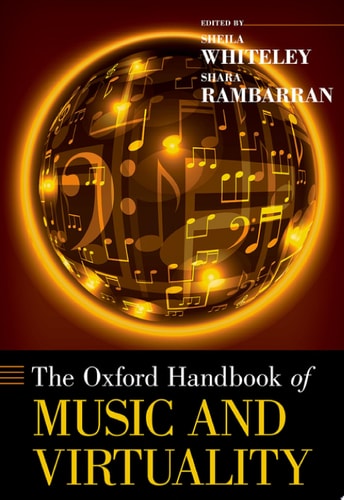
The Oxford Handbook of Music and Virtuality
0
0
As an Amazon Associate and affiliate partner, Menrva Books earns from qualifying purchases. Learn more
Author Description
Has the virtual invaded the realm of the real, or has the real expanded its definition to include what once was characterized as virtual? With the continual evolution of digital technology, this distinction grows increasingly hazy. But perhaps the distinction has become obsolete; perhaps it is time to pay attention to the intersections, mutations, and transmigrations of the virtual and the real. Certainly it is time to reinterpret the practice and study of music. The Oxford Handbook of Music and Virtuality, edited by Sheila Whiteley and Shara Rambarran, is the first book to offer a kaleidoscope of interdisciplinary perspectives from scholars around the globe on the way in which virtuality mediates the dissemination, acquisition, performance, creation, and reimagining of music. The Oxford Handbook of Music and Virtuality addresses eight themes that often overlap and interact with one another. Questions of the role of the audience, artistic agency, individual and communal identity, subjectivity, and spatiality repeatedly arise. Authors specifically explore phenomena including holographic musicians and virtual bands, and the benefits and detriments surrounding the free circulation of music on the internet. In addition, the book investigates the way in which fans and musicians negotiate gender identities as well as the dynamics of audience participation and community building in a virtual environment. The handbook rehistoricizes the virtual by tracing its progression from cartoons in the 1950s to current industry innovations and changes in practice. Well-grounded and wide-reaching, this is a book that students of any number of disciplines, from Music to Cultural Studies, have awaited.
Menrva's Summary
THE THESIS
This volume investigates the evolving relationship between digital technology and musical practice, questioning whether the traditional distinction between the virtual and the real remains relevant in contemporary culture. Editors Shara Rambarran and Sheila Whiteley curate a collection of interdisciplinary essays that examine how virtuality influences the creation, performance, and consumption of music. By synthesizing global scholarly perspectives, the text provides a framework for understanding how digital environments mediate identity, agency, and spatiality in the modern musical landscape.
THE SCOPE MAP
What You Will Find
- Historical analysis of virtuality in music, tracing developments from 1950s cartoons to modern industry innovations.
- Examination of virtual bands and holographic performance technology.
- Studies on fan identity, gender negotiation, and community building within digital spaces.
- Analysis of the economic and social impacts of internet-based music circulation.
Scope Limits
- The text focuses primarily on the intersection of music and virtuality rather than providing a comprehensive history of digital music production software.
- It does not offer technical manuals for virtual performance tools, focusing instead on cultural and sociological implications.
THE AUTHORITY PERSPECTIVE
Scholars and students in musicology and cultural studies identify this handbook as a foundational resource for understanding the digital transformation of the music industry. Readers frequently note the academic density of the prose, which provides a rigorous examination of the complex intersections between technology and human performance.
Page Count:
720
Publication Date:
2016-01-01
Publisher:
Oxford University Press
ISBN-10:
0190614048
ISBN-13:
9780190614041
Music
Music History
Digital Media
Sociology
Humanities
Academic
Technology
Community Tags
Other Editions(3)

Similar Books





Reader Comments
Share Your Thoughts
No comments yet. Be the first to share your thoughts!