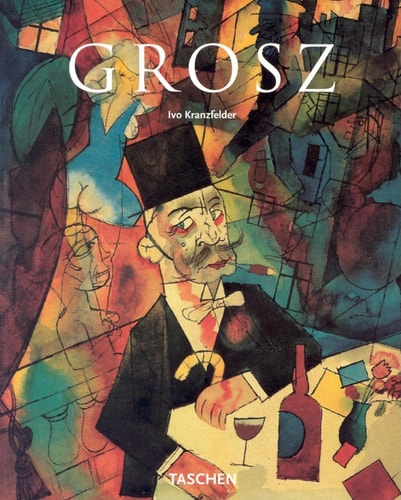
George Grosz 1893-1959: Radical Interpretations of the Modern Era
0
0
As an Amazon Associate and affiliate partner, Menrva Books earns from qualifying purchases. Learn more
Author Description
Savage caricatures: Acerbic painting as social commentary George Grosz (1893-1959) was one of the most important exponents of Dadaism, and therefore of political painting in general. He not only condemned both militarism and bourgeois culture, but also set himself in opposition to traditional forms of art. The decisive element in Grosz's paintings is their content: in them he pointed out defects in the political and social conditions, literally arraigning them before the public. For Grosz, painting served as a political instrument: "I drew and painted from a sense of contradiction and through my work tried to convince the world that it was ugly, sick, and phony." Fascinated by the metropolis, Grosz depicted the wild and dissolute life in the bars and nightclubs of the Weimar Republic in the 1920s. He directed his attention to the shady side of life and filled his canvas with caricatures of distorted figures. Grosz never permitted human beings to emerge as individuals, but instead always portrayed types, as representatives of a social level or class. After the publication of his candidly drawn "pornographic illustrations," Grosz fell under strong criticism in the 1920s. The Nazis castigated his works as "degenerate art." About the Series: Each book in TASCHEN's Basic Art Series features: a detailed chronological summary of the life and oeuvre of the artist, covering his or her cultural and historical importance a concise biography approximately 100 colour illustrations with explanatory captions
Menrva's Summary
THE THESIS
George Grosz's radical art served as a potent instrument for social and political critique. As a key figure of Dadaism, Grosz vehemently condemned militarism and bourgeois culture, challenging traditional artistic forms. His work, deeply rooted in the urban landscape, exposed the
THE SCOPE MAP
- A detailed chronological summary of George Grosz's life and artistic career.
- An examination of his cultural and historical significance.
- Approximately 100 color illustrations with explanatory captions.
- Analysis of his role as an exponent of Dadaism and political painting.
- Exploration of his depictions of life in the Weimar Republic's bars and nightclubs.
- Discussion of his critique of militarism, bourgeois culture, and social conditions.
- Insight into his use of caricature and portrayal of societal types.
THE AUTHORITY PERSPECTIVE
This book is presented as part of TASCHEN's Basic Art Series, suggesting an accessible yet informative overview of George Grosz's work. The content focuses on his critical and often provocative artistic output, particularly his social commentary and his role within Dadaism. The inclusion of numerous color illustrations indicates a visually driven approach to understanding his paintings and drawings. The series format implies a structured presentation of his life and the historical context of his art, aiming to educate a broad audience on his radical interpretations of the modern era.
Page Count:
96
Publication Date:
2001-01-01
Publisher:
Taschen
ISBN-10:
3822808911
ISBN-13:
9783822808917
Art
Biography
Non-Fiction
Dadaism
Art History
Social Commentary
Community Tags
Similar Books