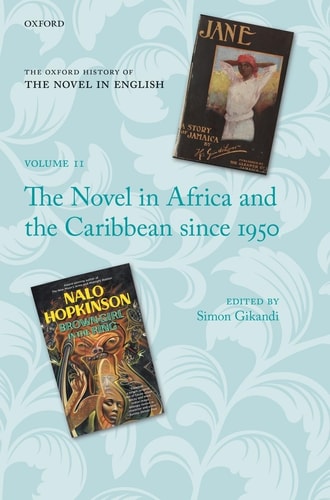
The Novel in Africa and the Caribbean Since 1950
0
0
As an Amazon Associate and affiliate partner, Menrva Books earns from qualifying purchases. Learn more
Author Description
Why Did The Novel Take Such A Long Time To Emerge In The Colonial World? And, What Cultural Work Did It Come To Perform In Societies Where Subjects Were Not Free And Modes Of Social Organization Diverged From The European Cultural Centers Where The Novel Gained Its Form And Audience? Answering These Questions And More, Volume 11, The Novel In Africa And The Caribbean Since 1950 Explores The Institutions Of Cultural Production That Exerted Influence In Late Colonialism, From Missionary Schools And Metropolitan Publishers To Universities And Small Presses. How These Structures Provoke And Respond To The Literary Trends And Social Peculiarities Of Africa And The Caribbean Impacts Not Only The Writing And Reading Of Novels In Those Regions, But Also Has A Transformative Effect On The Novel As A Global Phenomenon. Together, The Volume's 32 Contributing Experts Tell A Story About The Close Relationship Between The Novel And The Project Of Decolonization, And Explore The Multiple Ways In Which Novels Enable Readers To Imagine Communities Beyond Their Own And Thus Made This Form Of Literature A Compelling Catalyst For Cultural Transformation. The Authors Show That, Even As The Novel Grows In Africa And The Caribbean As A Mark Of The Elites' Mastery Of European Form, It Becomes The Essential Instrument For Critiquing Colonialism And For Articulating The New Horizons Of Cultural Nationalism. Within This Historical Context, The Volume Examines Works By Authors Such As Chinua Achebe, Nadine Gordimer, George Lamming, Jamaica Kincaid, V.s. Naipaul, Zoe Wicomb, J. M. Coetzee, And Many Others.
Menrva's Summary
THE THESIS
This volume investigates the historical emergence and cultural function of the novel within colonial and postcolonial societies in Africa and the Caribbean since 1950. Edited by Simon Gikandi, the text compiles research from 32 scholars to analyze how the novel form adapted to non-European social organizations. It argues that the novel served as a critical instrument for decolonization and the articulation of cultural nationalism, effectively transforming the genre into a global phenomenon.
THE SCOPE MAP
What You Will Find
- Analysis of cultural production institutions including missionary schools, universities, and small presses.
- Examination of the relationship between the novel and the project of decolonization.
- Critical studies of authors such as Chinua Achebe, Nadine Gordimer, George Lamming, and Jamaica Kincaid.
Scope Limits
- The volume focuses specifically on the post-1950 period and the geographic regions of Africa and the Caribbean.
- It does not provide a comprehensive history of the novel form prior to the mid-twentieth century.
THE AUTHORITY PERSPECTIVE
Scholars and critics recognize this volume as a significant contribution to postcolonial literary studies, noting its rigorous examination of institutional influences on creative output. Readers frequently highlight the academic density of the prose and the breadth of the contributors' expertise as key features of the work.
Page Count:
592
Publication Date:
2016-01-01
Publisher:
Oxford University Press
ISBN-10:
0190610018
ISBN-13:
9780190610012
Literature History
African
Literary Criticism
Caribbean
Community Tags
Similar Books