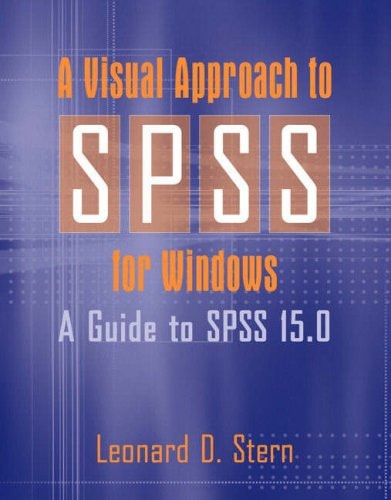
A Visual Approach to SPSS for Windows: A Guide to SPSS 15.0
0
0
As an Amazon Associate and affiliate partner, Menrva Books earns from qualifying purchases. Learn more
Author Description
A Visual Approach to SPSS for Windows is the first text of its kind to employ what the author refers to as “visual sequencing” to teach student how to use SPSS.From the Back CoverSPSS is, essentially, a visually-driven program, but most texts rely primarily on a verbal approach to describe its use. A Visual Approach to SPSS for Windows is the first text of its kind to employ “visual sequencing” to teach students how to use SPSS. This approach presents screen shots of SPSS windows combined with instructions that describe the sequence of each action needed to implement a procedure. Students find it easy to adapt the example shown in the book to their own analyses.In addition to describing how to run statistical procedures and interpret the output, the text also provides a brief discussion of the rationale underlying use of each statistical procedure and assumptions underlying the procedure. Additional features include detailed instructions for inspecting and interpreting output, examples of the format for reporting outcomes of statistical tests, and end-of-chapter exercises to test for mastery of the procedures that were described.
Menrva's Summary
THE THESIS
This text investigates how visual sequencing can bridge the gap between complex statistical software interfaces and user comprehension. Author Leonard D. Stern, an academic with expertise in psychological research and statistical instruction, argues that because SPSS is inherently a visual program, instructional materials should prioritize screen-based guidance over traditional text-heavy manuals. By integrating annotated screen shots with step-by-step procedural instructions, the book provides a framework that allows students to replicate statistical analyses while simultaneously understanding the underlying mathematical assumptions and output interpretations.
THE SCOPE MAP
What You Will Find
- Visual sequencing methodology using annotated SPSS 15.0 interface screenshots
- Step-by-step procedural guides for running common statistical tests
- Explanations of the rationale and statistical assumptions for each procedure
- Practical exercises for end-of-chapter mastery assessment
- Guidelines for interpreting and reporting statistical output
THE AUTHORITY PERSPECTIVE
The subject matter points to a specialized, pedagogical resource designed for students and researchers transitioning into quantitative analysis. The framing suggests a highly accessible, practical introduction that prioritizes visual workflow over abstract theoretical discourse.
Page Count:
432
Publication Date:
2007-08-09
Publisher:
Allyn & Bacon
ISBN-10:
0205546951
ISBN-13:
9780205546954
Statistics
Education
Data Analysis
Reference
Community Tags
Similar Books