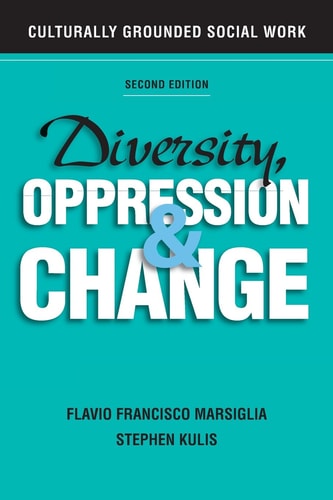
Diversity, Oppression, and Change: Culturally Grounded Social Work
0
0
As an Amazon Associate and affiliate partner, Menrva Books earns from qualifying purchases. Learn more
Author Description
The fully-updated second edition of Diversity, Oppression, and Change introduces readers to the practice of culturally grounded social work and closely examines the diversity issues most relevant for practice, policy, and research in social work and allied fields. In order for a social worker to affect positive change, it is critical to understand how the intersectionality of social factors-including race, ethnicity, social class, gender, sexual orientation, and ability status-affect not only the client but also the social worker.The authors of this book unpack the complex theory-based concepts related to oppression and privilege so that readers can learn to appropriately address the impact of historically-based oppression for certain groups and communities. Working with these communities to identify oppressive conditions, culturally grounded social workers facilitate real and lasting social change that will result in a more just society.
Menrva's Summary
THE THESIS
This text investigates how social workers can effectively implement culturally grounded practice to address systemic oppression and facilitate social change. Authors Flavio Francisco Marsiglia and Stephen S. Kulis utilize their academic expertise to provide a framework for understanding intersectionality within the context of social work. The book argues that by analyzing the interplay of race, gender, class, and ability, practitioners can better navigate the complexities of client interactions and institutional policy.
THE SCOPE MAP
What You Will Find
- Theoretical frameworks regarding oppression, privilege, and intersectionality.
- Methodologies for culturally grounded social work practice.
- Analysis of how social factors influence both the client and the practitioner.
Scope Limits
- The text focuses primarily on the social work profession and allied fields rather than general sociological theory.
- It does not provide an exhaustive history of every specific cultural group, focusing instead on the application of practice models.
THE AUTHORITY PERSPECTIVE
Experts and educators frequently identify this text as a foundational resource for students and practitioners seeking to integrate social justice into their clinical work. Readers often note the academic density of the prose, which is designed to challenge students to critically examine their own biases and professional roles.
Page Count:
448
Publication Date:
2015-07-01
Publisher:
Oxford University Press
ISBN-10:
0190615516
ISBN-13:
9780190615512
Politics
Diversity and Inclusion
Social Work
Social justice
New Used & Rental Textbooks
Academic
Professional Development
Sociology
Community Tags
Similar Books