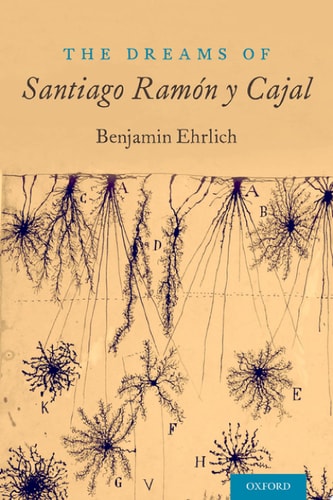
The Dreams of Santiago Ramón y Cajal
0
0
As an Amazon Associate and affiliate partner, Menrva Books earns from qualifying purchases. Learn more
Author Description
The Spanish anatomist Santiago Ramón y Cajal (1852-1934) explored the microscopic world of the brain and found a landscape inhabited by distinctly individual cells, later termed neurons. "The mysterious butterflies of the soul," he called them, "whose beating of wings may one day reveal to us the secrets of the mind." Although he ranks among the greatest scientists in history, the name of the Nobel Prize-winning "father of modern neuroscience" is not as well-known as that of Darwin, Pasteur, Galileo, Einstein, Copernicus, and Isaac Newton.The second half of the nineteenth century saw a revolution in the study of the mind. Cajal was a contemporary of Sigmund Freud (1856-1939), whose radical theories would scandalize the next century. Before he was a neuroanatomist Cajal conducted psychiatric experiments and before Freud became a psychiatrist, he worked in neuroanatomy. In public, Cajal spoke respectfully about Freud, but in private, Cajal rejected the man and his theories. In order to disprove Freud's "lies," Cajal started to record his own dreams in a diary, part of a notably personal book project, which he worked on from 1918 until his death in 1934. For reasons unknown, Cajal never published this work. Until recently, it was assumed that the manuscript had been destroyed during the Spanish Civil War.The Dreams of Santiago Ramón y Cajal is this lost dream diary, translated into English for the first time. The text is accompanied by an introduction to the life and work of Cajal, his relationship with the famed Viennese psychoanalyst, and the historical context surrounding the contributions of two great dueling intellects.
Menrva's Summary
THE THESIS
This work investigates the intersection of neuroanatomy and psychoanalysis by examining the long-lost dream diary of Santiago Ramón y Cajal, the father of modern neuroscience. Benjamin Ehrlich, a researcher and writer, utilizes the recovered manuscript to contrast Cajal’s empirical approach to the brain with the emerging, competing theories of Sigmund Freud. The book argues that Cajal’s private dream records were intended as a scientific rebuttal to Freudian psychoanalysis, providing a unique window into the mind of a man who mapped the cellular architecture of the human brain.
THE SCOPE MAP
What You Will Find
- The first English translation of Santiago Ramón y Cajal’s personal dream diary.
- Historical analysis of the rivalry between Cajal’s neuroanatomical focus and Freud’s psychoanalytic theories.
- Biographical context regarding Cajal’s life, career, and scientific contributions.
Scope Limits
- The text does not provide a comprehensive biography of Sigmund Freud beyond his relationship to Cajal.
- The analysis is limited to the period covered by the diary (1918-1934) and the specific historical context of the Spanish scientific community.
THE AUTHORITY PERSPECTIVE
Experts and readers frequently note that this text serves as a significant contribution to the history of science, offering a rare look at the private thoughts of a foundational figure in neuroscience. The prose is described as accessible yet rigorous, making it a valuable resource for those interested in the history of medicine and the evolution of psychological thought.
Page Count:
160
Publication Date:
2016-12-13
Publisher:
Oxford University Press
ISBN-10:
0190619619
ISBN-13:
9780190619619
Non-Fiction
Memoir
Biography
Psychology
Neuroscience
Neurosciences
Science History
Physicians
Community Tags
Other Editions(3)


Similar Books





Reader Comments
Share Your Thoughts
No comments yet. Be the first to share your thoughts!